 The Aosta Trip
San Lorenzo Early Christian Church Archaeological Area
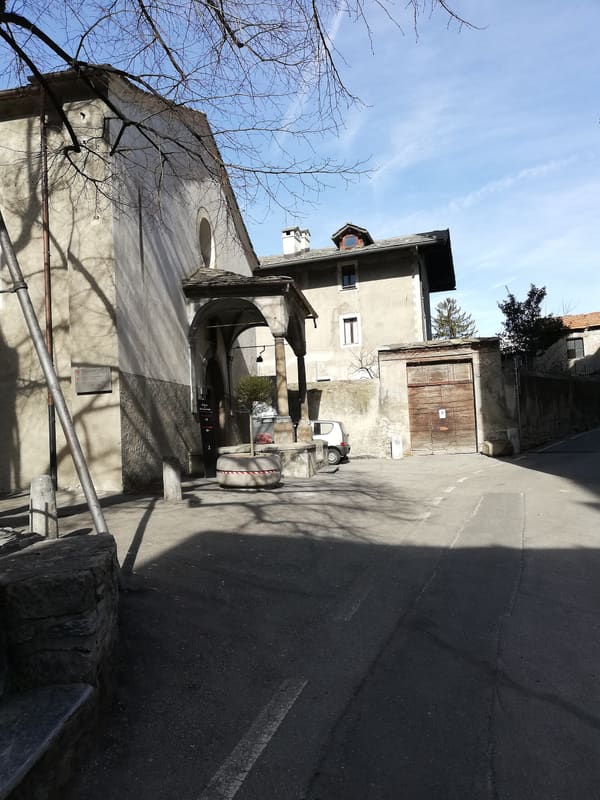
Fifth-century Latin-cross basilica, a few metres below the floor of the present church
You go down below the level of the deconsecrated church of San Lorenzo to the remains of the Early Christian funerary basilica with a cruciform plan, its arms ending in apses. Information panels accompany the route among liturgical structures, a platform with the tombs of three bishops of the fifth and sixth centuries and numerous burial chambers of the fifth to eighth centuries, above an older protohistoric funerary settlement.
 One-day guide · freeAugusta Praetoria in a DayA day's walk through Roman Aosta passes here: nine stops among gates, theatre and the forum's underground galleries.Open the guide →
Visiting
It is included in the ‘Aosta Archeologica’ combined ticket (full price €10, concession €8, also valid for the Roman Theatre, Forum Cryptoporticus, Regional Archaeological Museum and Megalithic Area). Opening hours: April–September 9:00–19:00, October–March 10:00–13:00 and 14:00–17:00, last admission 30 minutes before closing; closed on 25 December and 1 January. Part of the route is wheelchair-accessible.
History
The Early Christian basilica was built at the beginning of the fifth century as a funerary church with a cruciform plan, its arms ending in apses, on an area that had already been a Roman cemetery and, even earlier, a protohistoric funerary settlement. Local tradition calls it ‘Concilium Sanctorum’, the assembly of the saints, because it was built over the tombs of the city's first martyrs. Three bishops of Aosta who lived between the fifth and sixth centuries, Grato, Agnello and Gallo, were buried there: their tombs, together with other burial chambers datable to between the fifth and eighth centuries, occupied a platform in the presbytery area, once covered with slabs of local bardiglio marble.
A fire and a flood in the eighth century destroyed the original basilica; rebuilt in the ninth century, the new church was much smaller and lost its funerary function, becoming simply a place of worship. Between the eleventh and twelfth centuries the building was enlarged, while later works, up to the late Gothic period, almost entirely erased its Romanesque phase.
In 1642 the church was rebuilt once again, with a radical change of orientation: the apse, which had faced east according to traditional liturgical practice, was moved to the west. San Lorenzo remained a parish church until 1793; it then passed to a confraternity, served as a military warehouse during the First World War and finally as a parish hall.
The archaeological excavations by the regional Superintendency brought to light, below the level of the present floor, the remains of the Early Christian basilica and of its medieval transformations, which can now be visited as an archaeological area. Above ground, the church of San Lorenzo, now deconsecrated, today hosts temporary exhibitions on art and on themes linked to the mountains.
Nearby
 Sant'Orso Collegiate ChurchA capital in the cloister is dated 1133: the canons' communal life began here
 Tour FromageMentioned in a deed of 1191, from the fifteenth century it passed to the Vaudan by marriage
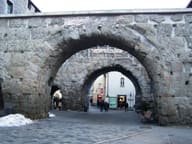 Porta PraetoriaOn the east side the marble facing added in the Claudian period (AD 41–54) survives
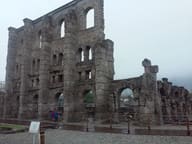 Roman TheatreSouth façade 22 metres high, with three tiers of openings that get smaller towards the top
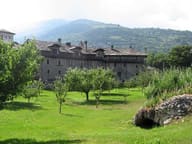 Roman AmphitheatreOf the sixty arches from the first century AD only eight remain, inside a convent
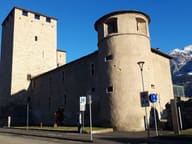 Bailiffs' TowerResidence of the bailiffs, then a prison until 1984, now the Conservatoire