 The Aosta Trip
Maison des Anciens Remèdes
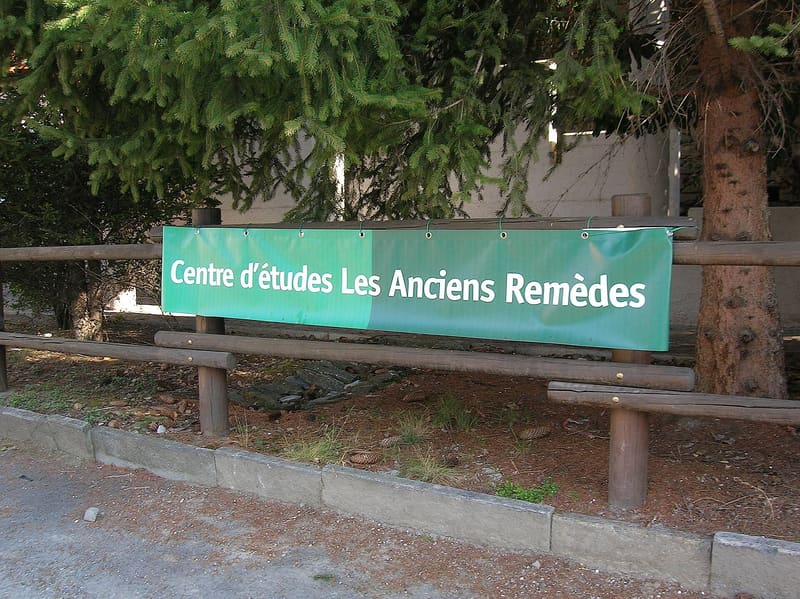
The route presents 38 plants of Aosta Valley tradition in a late-seventeenth-century barn
The house, once the barn and cowshed of the parish of Jovençan, holds on the ground floor the ‘Bouteucca de l'Apotéquéro’, the apothecary's shop, and a route past drawers of dried leaves, roots and seeds that you can touch and smell. Outside, from May to September, the Jardin des Anciens Remèdes traces the traditional Aosta Valley kitchen garden across 2,000 m², with poisonous plants to learn to recognise.

Visiting
Open on Saturdays and Sundays: from April to September 15:00–19:00, from October to March 14:00–18:00; on weekdays only by telephone booking, by 17:00 the day before. Full price €6 (Maison only or Jardin only), concession €4 for under-25s and over-70s; combined Maison+Jardin €10 full price, €6 concession; free for under-12s and for people with disabilities with a companion. The Jardin can be visited from May to September; phone to confirm.
Collections
Section — The Bouteucca de l'Apotéquéro. The route begins with the reconstruction of an apothecary's shop, the ‘Bouteucca de l'Apotéquéro’: shelves with preserved herbs and essences, scales and period containers introduce the visitor to the world of home-made remedies.
Section — The plants and their stories. The heart of the Maison is thirty-eight plants of Aosta Valley tradition, presented one by one with drawers full of dried leaves, roots, flowers and seeds that you can touch and smell. Among them are arnica, used against bruises, haematomas and fractures; juniper, the basis of the folk remedy ‘dzenevrà’ against stomach ache; masterwort, used as a digestive, as a disinfectant and against toothache; the violet, prepared as an infusion and nicknamed ‘the mountain people's aspirin’ for treating ailments caused by colds.
Section — The Way of Scents. A separate route is devoted to the essential oils obtained from medicinal plants, to be recognised by smell.
Section — Animals and natural cures. On the lower floor an area tells of the relationship between the animal world and natural remedies, together with films and testimonies about the traditional healers of the valley.
Section — The Jardin des Anciens Remèdes. Outside the house, open from May to September, the ethno-botanical garden of about 2,000 m² traces the evolution from the medieval kitchen garden to the traditional Aosta Valley one and teaches you to recognise edible, medicinal and toxic plants.
The Maison also offers educational games for children, such as a herb version of the game of the goose, and sudoku and dominoes with a botanical theme, and organises workshops in herbalism and natural cosmetics.
History
The house that holds the Maison des Anciens Remèdes is a late-seventeenth-century rural building of wood and stone, in the hamlet of Les Adam in Jovençan: until the early 1950s it served as the barn and cowshed of the parish, a winter shelter for animals, hay and grain. A more recent source instead dates it to the eighteenth century, and there is no agreement on the exact century.
The building was given its present use by the herbalists Viviane Vicquéry and Annie Vout, who in 2011 opened a centre there devoted to the use of medicinal plants and to the remedies of Aosta Valley folk tradition, with the stated aim of preserving their memory before it is lost. The route, set up in the old cowshed spaces, presents thirty-eight plants, from the most common to the rarest, together with the stories and recipes with which the folk culture of the valley has used them for centuries.
In June 2016 the Maison gained a second space: the Jardin des Anciens Remèdes, an ethno-botanical garden of about 2,000 square metres built next to the house, which traces the evolution from the medieval kitchen garden to the traditional Aosta Valley one and includes a section devoted to poisonous plants to learn to recognise.
The Maison and the Jardin are now run by the association Centre d'Études Les Anciens Remèdes, which also organises herbalism workshops and events such as the Herbarium summer series.
Nearby
 Tour de VillaThe tower is over 20 metres high, with walls of 2.5 metres at the base
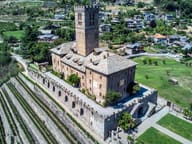 Sarre Royal CastleVictor Emmanuel II bought it in 1869 for his hunting trips
 Aymavilles CastleFour corner towers added in the fifteenth century, then Baroque between 1713 and 1728
 Saint-Martin-de-Corléans Megalithic Area (MegaMuseo)46 anthropomorphic stelae discovered 6 metres below street level
 Saint-Pierre CastleThe core dates from the twelfth century, the four corner turrets from the nineteenth
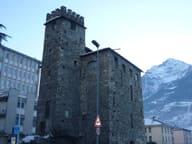 Leper's TowerIn 1773 the Mauritian Order confined a leper who had come from Oneglia here