 The Aosta Trip
Sarre Royal Castle
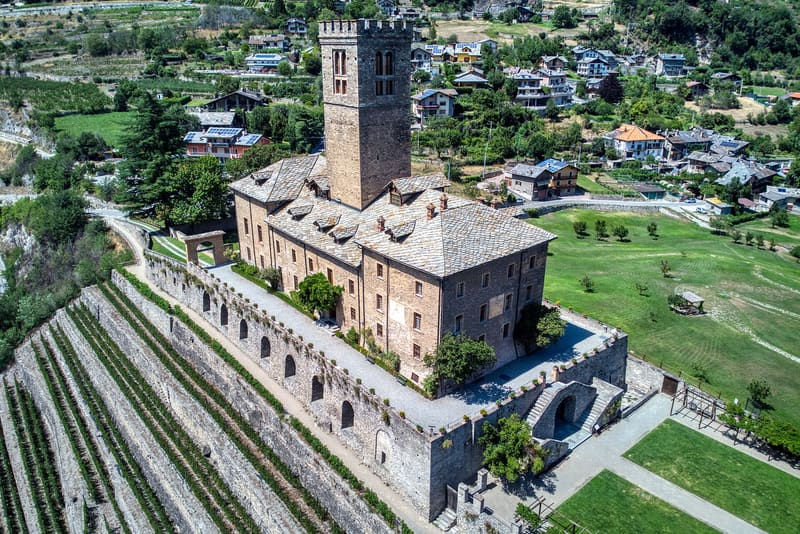
Victor Emmanuel II bought it in 1869 for his hunting trips
The castle has an elongated plan with a square central tower, raised when Victor Emmanuel II turned it into a hunting residence. The walls of the ground floor and the staircase are covered with hundreds of ibex and chamois trophies, collected at the wish of Umberto I. On the first floor you can see furniture recorded in an inventory of 1890.
 One-day guide · freeThe Fairy-Tale CastlesA day among the castles west of Aosta passes here, from the towers of Saint-Pierre to the Roman bridge of Pont d'Ael.Open the guide →
Visiting
Guided tours only, French/English audio guide available. Opening hours: Oct–Mar 10:00–13:00 and 14:00–17:00, Apr–Sep 9:00–19:00. Closed on Mondays, except in July, August and on public holidays; also closed on 25 December and 1 January. Full price €8, concession €6 only for groups of 25 paying people or with a tourist guide, aged 19–25 €3, free for under-18s. Last tour 30 minutes before closing.
History
Its origins date from the eleventh to twelfth centuries, when a tower on this spot was under the control of the lords of Bard. In 1242 Amadeus IV of Savoy and Gotofredo I di Challant reached an agreement: the castle went to the latter's nephew, Jacques di Bard, and the county of Sarre was created. When this line died out, the fief passed through successive families: Enrico di Quart in 1364, Thibaud de Montagny in 1405, then the Genève-Lullin, the Leschaux, the La Crête, the Roncas and the Rapet.
In 1708 the lawyer and entrepreneur Jean-François Ferrod d'Arvier, who had grown rich from military supplies and copper mines, bought the barony and had the building rebuilt almost from scratch, keeping only the medieval tower (one source dates the work to 1710). Having become Marquis of Hermance and Baron of Avilly, however, he lost his entire fortune in the financial crash of 1720 linked to John Law's French Banque Royale (one source gives 1730), and the Rapet heirs regained possession of the castle.
In 1869 King Victor Emmanuel II bought the castle, took the title of Count of Sarre and turned it into his headquarters for hunting in the Cogne, Rhêmes and Valsavarenche valleys. The architect Matteo Cerrato directed the enlargement works, which raised the tower, adding panoramic windows, and built stables, kennels and armouries. His successor Umberto I then had the rooms decorated with hundreds of ibex and chamois trophies, hunted in the same valleys that in 1922 became the Gran Paradiso National Park.
Between 1936 and 1943 Umberto II and his wife Maria José spent their summers here with their children; after the armistice of 8 September 1943, Maria José organised her own escape to Switzerland from here.
The castle remained with the House of Savoy until 1972, then passed to a new owner. In 1989 it was bought by the Aosta Valley Autonomous Region, which restored it and opened it to the public as a museum devoted to the presence of the Savoy dynasty in the valley.
Nearby
 Aymavilles CastleFour corner towers added in the fifteenth century, then Baroque between 1713 and 1728
 Maison des Anciens RemèdesThe route presents 38 plants of Aosta Valley tradition in a late-seventeenth-century barn
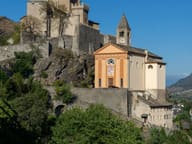 Saint-Pierre CastleThe core dates from the twelfth century, the four corner turrets from the nineteenth
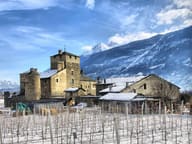 Sarriod de la Tour CastleIn the Hall of Heads, 171 carved wooden corbels, all different
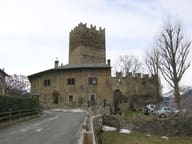 Tour de VillaThe tower is over 20 metres high, with walls of 2.5 metres at the base
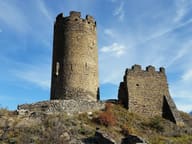 Châtel-ArgentThe name ‘Castrum Argenteum’ already appears in a document of 1176