 The Aosta Trip
Saint-Martin-de-Corléans Megalithic Area (MegaMuseo)
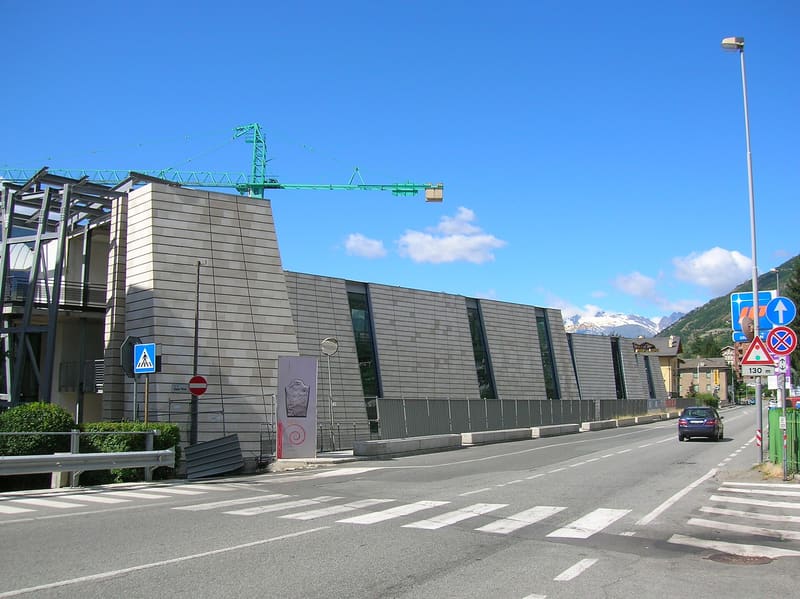
46 anthropomorphic stelae discovered 6 metres below street level
Suspended walkways descend 6 metres below the street to the level of the prehistoric site. The route passes through six phases, from the furrows of a ritual ploughing to the pits, from the rows of wooden posts to the room of the 46 anthropomorphic stelae, human-shaped stone statues, up to the megalithic tombs with a dolmen, a burial chamber made of large stone slabs.

Visiting
Tuesday–Sunday 10:00–18:00, last admission 90 minutes before closing, closed on Mondays. Self-guided visit: full price €7, concession €5, young people aged 19–25 €3. Guided tour: full price €12, concession €8, young people €3, family €25. Audio guide included in Italian, French and English. Alternatively, the site is also included in the ‘Aosta Archeologica’ combined ticket (€10 full price, €8 concession for groups, tourist guides and affiliated organisations; free up to and including age 25), also valid for the Roman Theatre, the Forum Cryptoporticus, the Early Christian Church of San Lorenzo and the Regional Archaeological Museum.
Collections
Descent through time — The visit goes down via walkways to about 6 metres below the present street level, where the archaeological site proper lies: lighting that changes along the route accompanies the passage from today to prehistory, through six chronological phases.
The ritual ploughing — It dates from the end of the fifth millennium BC: these are the marks of furrows in the ground, made not for cultivation but as a propitiatory act, accompanied by the ritual sowing of human teeth.
The pits — Datable to the beginning of the third millennium BC, these are aligned pits which held offerings at the bottom, such as grain millstones and remains of fruit and cereals.
The posts and the stelae — In the same phase there appears an alignment of at least 24 wooden totem posts, oriented from north-east to south-west, progressively replaced by over 46 anthropomorphic stelae: stone statues up to 3 metres tall, which depict deified figures or warriors and are considered the first true manifestation of megalithism in the area. Since November 2023 a dedicated room has brought them all together.
The megalithic tombs and the dolmens — Datable to the end of the third millennium BC, these are tombs built entirely above ground; the so-called Tomb 2, on a triangular stone platform, yielded a collective burial of 39 individuals. In addition there are dolmens, burial chambers formed of large stone slabs.
History
The Saint-Martin-de-Corléans megalithic area, on the western outskirts of Aosta, was discovered by chance in June 1969 during building work. The Autonomous Region acquired the land to protect the remains in situ and began systematic excavations, which continued for over twenty years and resumed with new campaigns in 2001 and in 2006–2008.
The excavations revealed an area of worship and burial in use for almost five thousand years, with six main phases from about 3000 to about 1100 BC. At the end of the fifth millennium BC the site was an open-air sanctuary marked by ritual furrows; at the beginning of the third millennium BC aligned wooden posts were raised there (they functioned as totems) together with over forty anthropomorphic stelae, stone slabs carved with stylised human figures. Later the area became a privileged necropolis with megalithic tombs: Tomb 2, the most monumental, contained the remains of 39 individuals.
With the Bronze Age the site lost its religious function and was farmed; burials resumed in the Iron Age with a stone tumulus. In Roman times, between the late first century BC and the first century AD, a rural settlement with domestic activities grew up there, along with a cremation necropolis of about thirty tombs. In the Middle Ages the focal point became the church of Saint-Martin-de-Corléans, recorded as early as 1176 as ‘ecclesiam sancti Martini de Coriano’, although the present building dates from the seventeenth century.
To protect and display the remains, the Region built a large underground museum over the area: opened on 24 June 2016, it lets you descend about six metres below street level and follows the six phases of the site with a dynamically lit display.
Nearby
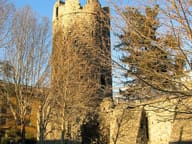 Tour NeuveCrenellated cylindrical tower at the north-west corner, of the De Turre Nova lords
- Porta DecumanaWest gate demolished in 1812; the remains are in the basement of the Regional Library
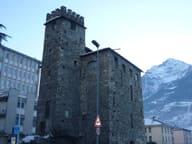 Leper's TowerIn 1773 the Mauritian Order confined a leper who had come from Oneglia here
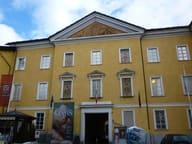 MAR - Regional Archaeological MuseumIn the basement lie the remains of the Roman Principalis Sinistra gate
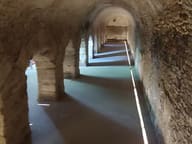 Forum CryptoporticusThe horseshoe-shaped galleries measure 71.80 m along the sides and 87.10 m in the centre
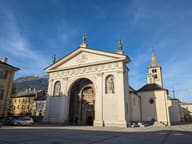 Aosta CathedralIn the choir, two medieval mosaics: the twelve months and the four rivers of Paradise