 The Aosta Trip
Aymavilles Castle
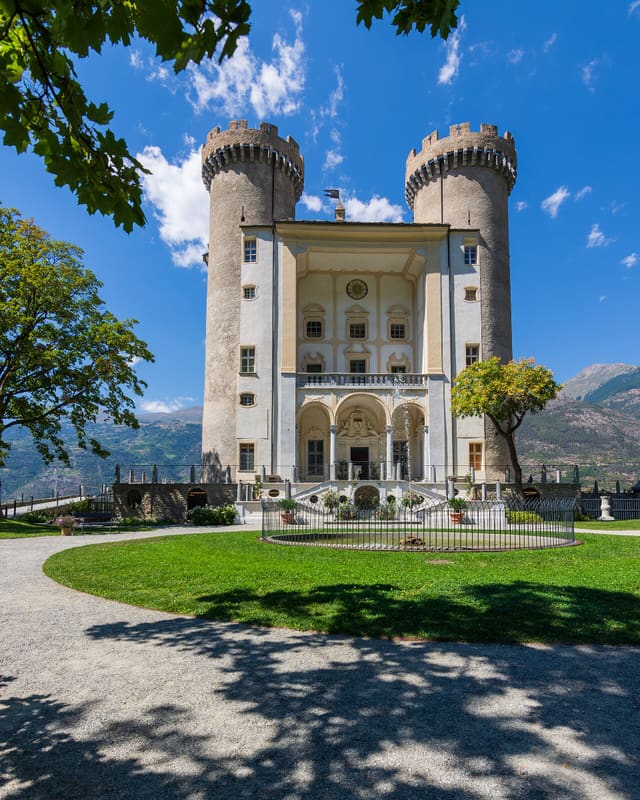
Four corner towers added in the fifteenth century, then Baroque between 1713 and 1728
The exterior shows four fifteenth-century corner towers and the Baroque loggias added by Joseph-Félix de Challant in the early eighteenth century, which softened the look of the medieval fortress. Inside, a museum route on four levels displays the collection of the Académie Saint-Anselme.
 One-day guide · freeThe Fairy-Tale CastlesA day among the castles west of Aosta passes here, from the towers of Saint-Pierre to the Roman bridge of Pont d'Ael.Open the guide →
Visiting
Unguided visit with optional audio guide (€2) or guided tour at 11:30 and 15:30, and at 17:30 from April to September. Opening hours: April–September 9:00–19:00, October–March 10:00–18:00. Closed on Mondays, except in July, August and on public holidays, and on 25 December. Full price €10, concession €7; guided tour €15, concession €10. Wheelchair accessible, but in September 2026 the lift was not guaranteed to be working.
History
The first documented mention of the castle is dated to May 1207 by some sources and to 1287 by others; others again speak more generally of a structure with ‘thick walls’ from the twelfth to thirteenth centuries. It stood near the confluence of the Dora Baltea and the Grand Eyvia stream, controlling the road to Gaul and the access to the marble quarries of the Val di Cogne. In 1354 the House of Savoy entrusted the castle to a branch of the Challant family, which took its name, Challant-Aymavilles.
Aimone di Challant strengthened the original structure during the fourteenth century. In the first decades of the fifteenth century Amedeo di Challant added the four corner towers on a circular base, with crenellations and corbels, which gave the castle the imposing appearance still recognisable today; his son Giacomo di Challant, who died in 1459, raised the towers and the central block and built the load-bearing timber roof that is still visible.
Between 1713 and 1728 Baron Giuseppe Felice (Joseph-Félix) di Challant turned the castle from a fortress into a noble residence: he removed part of the outer defences and added late Baroque features, such as oval openings, loggias, stucco decorations and the external double-flight staircase. The Challant-Aymavilles line died out on 18 October 1804, with the death at the age of seven of the young Maurice-Philippe de Challant-Châtillon.
In 1837 the castle passed by inheritance to Vittorio Cacherano Osasco della Rocca, who around 1840 refurbished the rooms with eclectic wall decorations and moved his collection of paintings, coins and books there. Further changes of ownership, to bourgeois owners, followed: Count Clemente Asinari in 1870 and the Bombrini family of Genoa, who bought it in the last twenty years of the nineteenth century (in 1882 or in 1895) and remained its owners until 1970.
In 1970 the Aosta Valley Autonomous Region bought the castle. After a long restoration, the museum on four exhibition levels, which also houses the collections of the Académie Saint-Anselme, founded in 1855, opened permanently on 14 May 2022.
Nearby
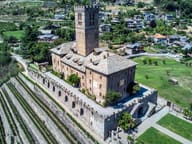 Sarre Royal CastleVictor Emmanuel II bought it in 1869 for his hunting trips
 Sarriod de la Tour CastleIn the Hall of Heads, 171 carved wooden corbels, all different
 Saint-Pierre CastleThe core dates from the twelfth century, the four corner turrets from the nineteenth
 Maison des Anciens RemèdesThe route presents 38 plants of Aosta Valley tradition in a late-seventeenth-century barn
 Châtel-ArgentThe name ‘Castrum Argenteum’ already appears in a document of 1176
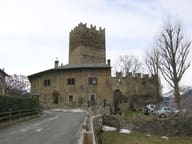 Tour de VillaThe tower is over 20 metres high, with walls of 2.5 metres at the base