 The Aosta Trip
Saint-Pierre Castle
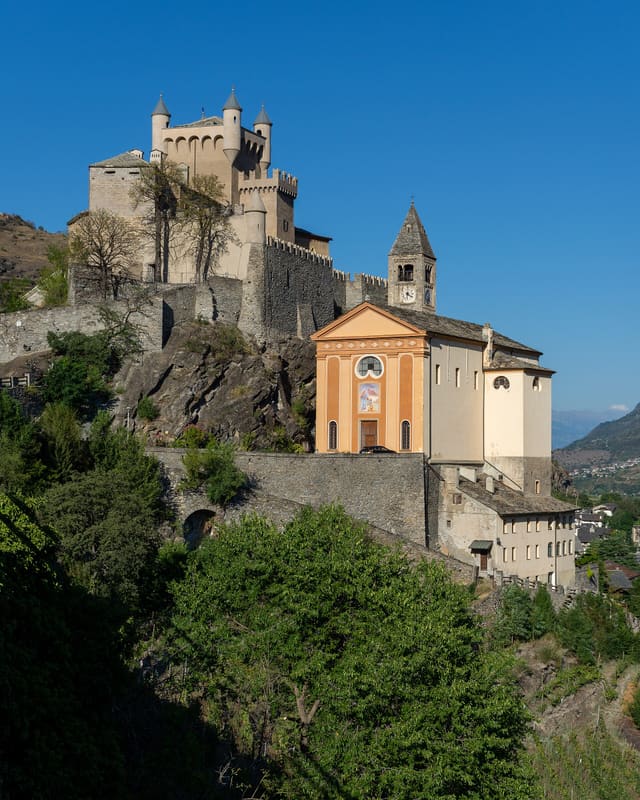
The core dates from the twelfth century, the four corner turrets from the nineteenth
On a rocky spur, the castle shows its outline from afar, with the four corner turrets added in the nineteenth century. Inside, in the new 2022 display, the Efisio Noussan Regional Museum of Natural Sciences occupies 16 rooms on the flora, fauna and geology of the valley, with interactive exhibits and touch screens; there are no period-furnished rooms.
 One-day guide · freeThe Fairy-Tale CastlesA day among the castles west of Aosta passes here, from the towers of Saint-Pierre to the Roman bridge of Pont d'Ael.Open the guide →
Visiting
Closed on Mondays (except public holidays), 25 December and 1 January. Opening hours: April–June and September 10:00–19:00; July and August 10:00–13:00 and 17:30–23:00, with free admission on Tuesdays from 20:30; October–March 10:00–18:00. Last admission is one hour before closing. Self-guided visit €10 (concession €8, aged 19–25 €3, free for under-18s), guided tour €15; duration about one hour. The lift may not be working: people with reduced mobility can only access rooms 1, 3 and 4. Special opening on Monday 7 December 2026.
Collections
The Efisio Noussan Regional Natural Science Museum extends over 16 rooms, on the ground floor and on two upper floors of the castle, and combines the history of the building and the nature of the Aosta Valley with multimedia and interactive installations.
Ground floor: the Room of Coats of Arms (1) opens the tour with the heraldry of the noble families of Saint-Pierre and virtual reconstructions of the castle's history, in a neo-Gothic setting with benches, high chairs and tables. The Room of Differences (2) presents Aosta Valley biodiversity across the altitude belts, from the vineyards and olive groves of the valley floor to the glacial environments of Mont Blanc. The Room of Time (3), the castle's central hall with a two-colour chequerboard floor and wrought-iron chandeliers, recreates a nineteenth-century museum with period display cases and videos on conservation and research work. The Room of Rocks (4) is devoted to Alpine geology, with large photographs of the Matterhorn and the Cime Bianche, geological maps and rock samples such as Mont Blanc granite and Gran Paradiso gneiss. In the basement, the Room of Mines (5) tells the story of mining, from the Cogne mines to those of the side valleys, with mining finds and period films of the work of Aosta Valley miners.
The following rooms (6–8) look at the effects of sun exposure on mountain slopes, pay tribute to the naturalist abbés who founded the Société de la Flore Valdôtaine between the nineteenth and twentieth centuries, and devote a room to Efisio Noussan, the entrepreneur and naturalist who relaunched the society in the 1970s and after whom the museum, founded in 1985, is named.
On the upper floor, the Room of Water (9–10) uses dioramas and natural reconstructions to follow water from the glaciers to springs, lakes, waterfalls, peat bogs and marshes, with a continuous sound and visual experience. The Room of the Woods (11) shows the Aosta Valley tree species and the behaviour of birds, with a sensory ‘night walk’ among sounds, shadows and songs in a life-size wood. The Room of Vertigo (12) presents, with 3D-printed reproductions of animals and plants, the adaptations to vertical life on rocks and the suspended mountain villages.
The Room of Meadows (13–14) follows, with a video wall, the seasonal cycle of alpine meadows through flowering, animal tracks and pastoral activities, from summer green to winter white. The Room of Ice (15) is devoted to glaciers as a tourist attraction, a scientific laboratory and a water reserve, with videos on the origins of mountaineering and on climate change: this is where the marmot found on the Lyskamm, the oldest mummified find in Italy, is kept. The Room of Emotions (16), with a seventeenth-century ‘viret’ (swivel seat), closes the tour with panoramic views over the Aosta Valley and a symphonic musical accompaniment.
History
The origins of the castle date from the twelfth century. The ‘Charter of Franchises’ of 1191 already mentions the ‘fratelli de castro Sancti Petri’ as co-owners, while a document of 1287 records that the castle was jointly owned by the De Quart and De Sancto Petro families: the two dates, given by different sources, in any case point to shared ownership as early as the High Middle Ages. In the following centuries the property passed through the Lords of Quart, the House of Savoy and the Challant family.
In the seventeenth century Pietro Filiberto (Pierre-Philibert) Roncas enlarged the castle and held many receptions there.
In 1798 the castle was sold to the Gerbore family and in 1873 it passed to Baron Emanuele Bollati. From that date the baron commissioned the Piedmontese architect Camillo Boggio to renovate the building: Boggio added four round turrets at the corners, which give the castle the romantic, fairytale appearance it still keeps today.
Since 1985 the castle has housed the Regional Museum of Natural Sciences, devoted to the Aosta Valley environment from mineralogy to zoology. A long restoration, with structural consolidation, reinforcement of the floors and timber roofs and the installation of modern systems and a lift, kept the museum closed for years, until its reopening on 25 November 2022.
Nearby
 Sarriod de la Tour CastleIn the Hall of Heads, 171 carved wooden corbels, all different
 Châtel-ArgentThe name ‘Castrum Argenteum’ already appears in a document of 1176
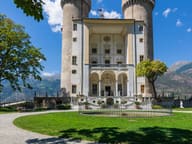 Aymavilles CastleFour corner towers added in the fifteenth century, then Baroque between 1713 and 1728
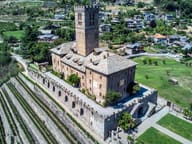 Sarre Royal CastleVictor Emmanuel II bought it in 1869 for his hunting trips
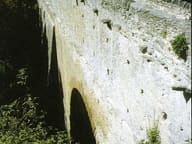 Pont d'Ael Aqueduct BridgeIn 3 BC Caius Avillius Caimus, from Padua, had the inscription carved on the bridge
 Maison des Anciens RemèdesThe route presents 38 plants of Aosta Valley tradition in a late-seventeenth-century barn