 The Aosta Trip
Consolata Roman Villa
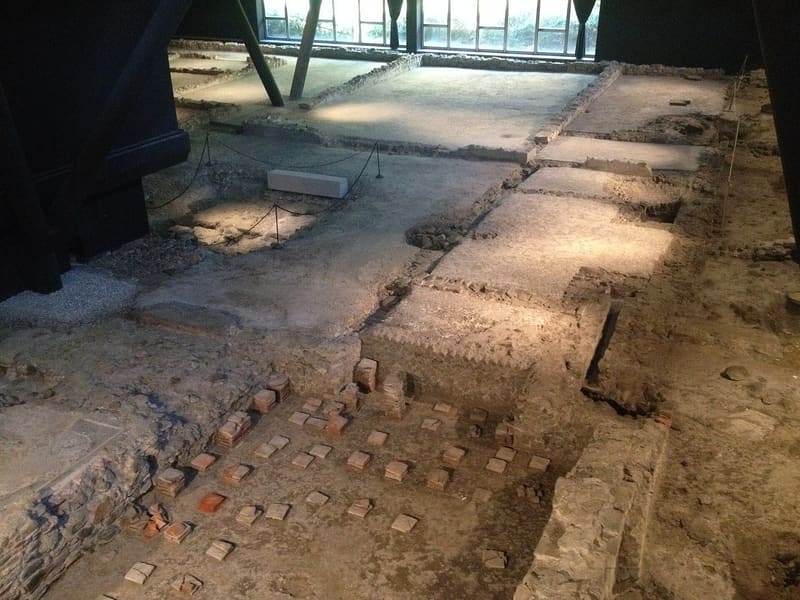
Discovered by chance in 1971 during the construction of a building
An iron structure protects the remains, and a raised walkway with panels lets you walk over them from above without treading on them. You can make out the atrium with the rainwater basin in the centre, the triclinium where people ate, two small bedrooms (cubicula) and, on the north side, the kitchen and storerooms (horrea). In some places there are still traces of the mosaic floor and of the heating system of the private baths.

Visiting
It can only be visited by booking (telephone 0165 275911), on Tuesdays and Saturdays from 9:00 to 13:00 and on Fridays from 14:00 to 17:00; closed 25 December and 1 January. Free admission, wheelchair accessible; photos and videos allowed for non-commercial use. Opening hours change often: it is best to check them when you book.
History
In the Consolata area, on the outskirts of Augusta Praetoria, there was already a settlement before the founding of the Roman colony in 25 BC, at a point crossed by a branch of the road towards the Great St Bernard Pass. Here, in the second half of the first century BC, a suburban villa was built: the residence of a well-off owner, combined with a farm with storerooms for the harvest (horrea), looking onto an atrium with a central basin for collecting rainwater (impluvium).
The villa included residential rooms, such as the triclinium for meals and two small bedrooms (cubicula), and a private bath suite (balnea) comparable in quality to the public ones, with mosaic floors and an underfloor heating system. After the building was abandoned, between the fourth and fifth centuries AD, the area was reused as a necropolis, with graves dug among the remains of the villa.
The remains stayed buried for centuries, until February 1971, when work on the construction of a building brought them to light. The excavations, directed by the archaeologist Rosanna Mollo Mezzena, continued with further campaigns in the 1980s and uncovered the entire rectangular plan of the building.
To protect the masonry and the floors, an iron cover has been built over the remains, with a raised walkway with information panels to walk along. The site is publicly owned and open to the public free of charge, but only by booking and on limited days and at limited times.
Nearby
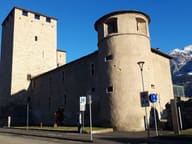 Bailiffs' TowerResidence of the bailiffs, then a prison until 1984, now the Conservatoire
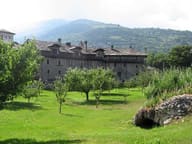 Roman AmphitheatreOf the sixty arches from the first century AD only eight remain, inside a convent
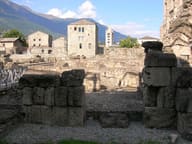 Tour FromageMentioned in a deed of 1191, from the fifteenth century it passed to the Vaudan by marriage
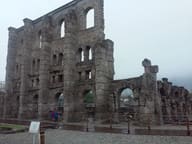 Roman TheatreSouth façade 22 metres high, with three tiers of openings that get smaller towards the top
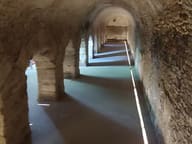 Forum CryptoporticusThe horseshoe-shaped galleries measure 71.80 m along the sides and 87.10 m in the centre
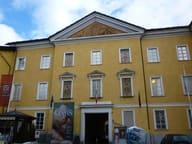 MAR - Regional Archaeological MuseumIn the basement lie the remains of the Roman Principalis Sinistra gate