 The Aosta Trip
Parc Animalier d'Introd
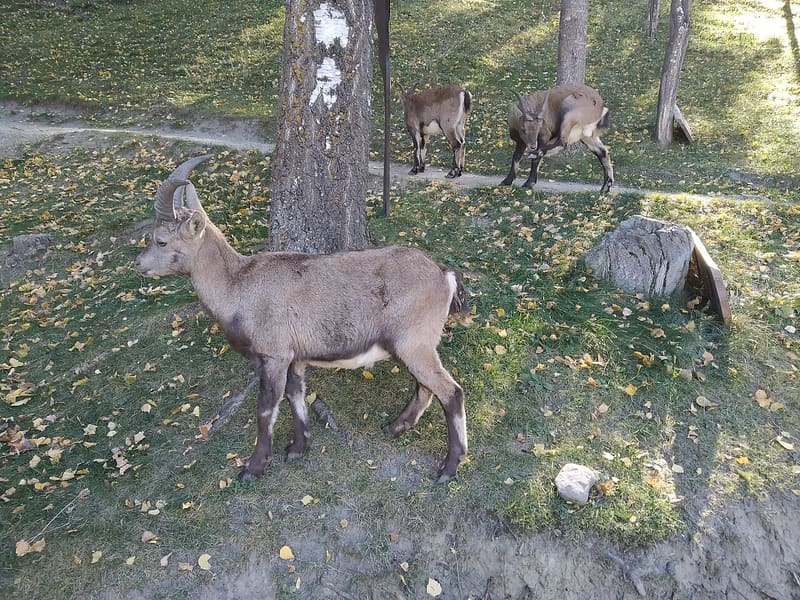
Ibex, chamois, wolves and birds of prey along a 1.5 km path with a 150 m height gain
An enclosure of about 60,000 m² at 900 m, above Les Villes-Dessus, with ibex, chamois, red deer, roe deer, wild boar, marmots, foxes, badgers and wolves, and, among the birds of prey, golden eagle, eagle owl, snowy owl, tawny owl and barn owl. The dirt path runs in a clockwise loop, with steep sections. Several animals come from European zoos or from rescue centres and would not survive in the wild.

Visiting
Open from April to December, every day including public holidays, 9:30–18:00; no booking needed. Adults €12.50, children aged 3–14 €8, free up to age 2; children need an ID document. Dogs not allowed (free kennels at the entrance), pushchairs not recommended; in winter you need microspikes. In the afternoon the park is in shade: the morning is better.
History
The Parc Animalier opened in spring 2005 at Les Villes-Dessus, a hamlet of Introd, from an idea by Corrado Brunet, who in 2022 owned it together with Attilio Fusinaz and Oreste Ollier. In the first year 12,000 visitors came; in 2025, at its twentieth birthday, there were more than 50,000 a year. Inside the park the woodworkers' association Les Amis du bois runs a workshop, the Atelier del legno.
The animals were not captured in the wild. Some come from other Italian and European zoos, where they were born and raised in captivity; others from rescue centres: animals treated after an injury or illness, but left with problems that would not allow them to survive in the wild. Animals born in the park often receive an Aosta Valley name: the wild boar piglets born in spring 2024 are called Indren, Miage, Money and Rutor, like four glaciers of the region.
The wolves arrived in 2022: a pair, male and female, from a wildlife park in the Czech Republic. An area of over 5,000 m² was fenced off for them, with zones for capture and quarantine, which the public views from a walkway kept at a distance from the enclosure. The project received €100,000 of European funds through the Local Action Group, and an environmental association criticised it: too little space for an animal that in the wild travels tens of kilometres a day, and public money that should have gone to agriculture.
Meanwhile, the wild wolf had come back to the Aosta Valley on its own. The last one had been killed around 1860 in Valsavarenche, the valley that opens just above Introd. On 1 August 2005, a few months after the park opened, forestry staff sighted the first ‘Aosta Valley’ wolf, a lone animal that had come from Piedmont, in the Arsy valley at Gignod, below Mont Fallère. The first pack formed in 2007 in the Gran Paradiso National Park; today there are 7 or 8 packs and they occupy the whole region.
Nearby
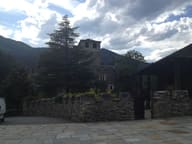 Introd CastleThe present polygonal plan dates from the fifteenth-century works, not from 1260
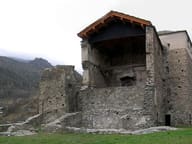 La Mothe CastleClosed since 2026 for work on the Museum of the Alpine Future, €6.5 million from the PNRR
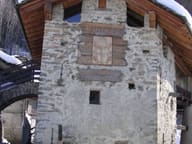 Maison Musée Jean-Paul IIIt holds objects, stamps and coins from the 18 years of John Paul II's pontificate
- Saint-Nicolas Cross-Country TrailsAt Fossaz a 2.5 km loop is floodlit and you can ski in the evening too
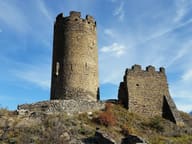 Châtel-ArgentThe name ‘Castrum Argenteum’ already appears in a document of 1176
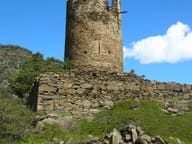 Montmayeur CastleThe cylindrical tower of 1271 still keeps its swallowtail merlons