 The Aosta Trip
Introd Castle
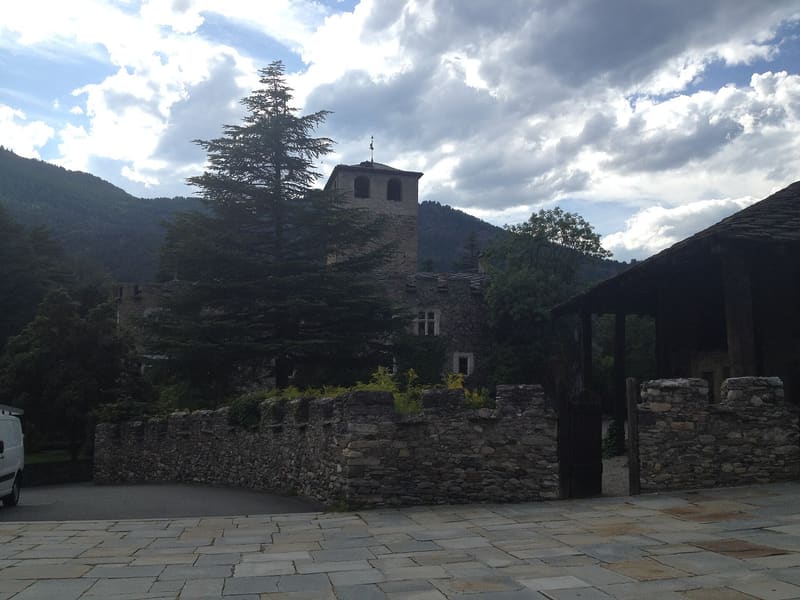
The present polygonal plan dates from the fifteenth-century works, not from 1260
The castle stands on a promontory between the gorges of the Savara stream and the Dora di Rhêmes, with an almost rounded polygonal plan instead of the usual quadrilateral. Next to it is the Ola granary, made of wood, with a Gothic lock in the shape of a castle.

Visiting
You can visit the ground floor and the park, only on a guided tour and by booking through the Fondation Grand Paradis. In 2026: from 27 June to 2 August every day 15:00–18:00, from 3 to 23 August 10:00–13:00 and 15:00–19:00, plus some ‘Au Clair de la Lune’ evenings on Wednesdays at 21:00 and 22:00; in winter on 26–28 December and 4–6 January. The tower is currently closed. Admission €6 full price, €3 concession, free for under-6s and for residents of the Fondation's municipalities. A maximum of 25 people per tour, ground floor wheelchair accessible, dogs not allowed. The castle has belonged to the Region since 2023; information on 0165 274311 (Monday–Friday 9:00–12:00).
History
Introd Castle stands on a promontory between two streams, hence the place name, which is said to derive from entre-eaux, ‘between the waters’. Its origins probably date from the twelfth century, when the structure was still a simple quadrangular keep surrounded by a modest ring of walls; the castle appears in the records of the castellany of Châtel-Argent in 1244.
In 1260 Pierre Sarriod di Introd greatly enlarged the building and made it a true fortress. Further works in the fifteenth century gave it the polygonal, almost rounded form that sets it apart from the other Aosta Valley castles: this was the period of the Sarriod family's greatest power, when it united the lordships of Introd and de La Tour, the latter at Saint-Pierre.
In the second half of the nineteenth century the castle was struck by a fire, and the sources disagree on whether a second fire, often dated to the first years of the twentieth century, is a separate event or a different memory of the same one; in any case the damage was severe. The restoration that gave the building its present appearance was begun between 1900 and 1910, commissioned by the owner, Cavaliere Gonella, and directed by the architect Jean Chevalley. The central keep reopened to the public in July 2012.
After the Sarriod family, ownership passed to the Counts Caracciolo di Brienza, who kept it until 2023, when the Aosta Valley Autonomous Region bought the castle for €3.6 million and entrusted its management to the Dipartimento Soprintendenza per i beni e le attività culturali. The sources differ on the month of the transfer: August or 30 November of that year. Today the ground floor and the park are open to the public thanks to an agreement between Introd municipality and the Fondation Grand Paradis.
Nearby
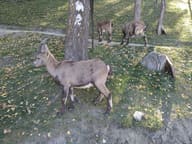 Parc Animalier d'IntrodIbex, chamois, wolves and birds of prey along a 1.5 km path with a 150 m height gain
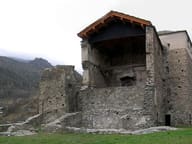 La Mothe CastleClosed since 2026 for work on the Museum of the Alpine Future, €6.5 million from the PNRR
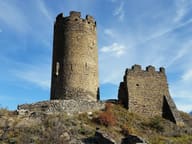 Châtel-ArgentThe name ‘Castrum Argenteum’ already appears in a document of 1176
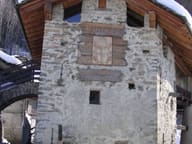 Maison Musée Jean-Paul IIIt holds objects, stamps and coins from the 18 years of John Paul II's pontificate
- Saint-Nicolas Cross-Country TrailsAt Fossaz a 2.5 km loop is floodlit and you can ski in the evening too
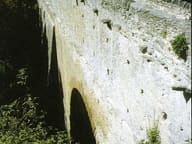 Pont d'Ael Aqueduct BridgeIn 3 BC Caius Avillius Caimus, from Padua, had the inscription carved on the bridge