 The Aosta Trip
Montmayeur Castle
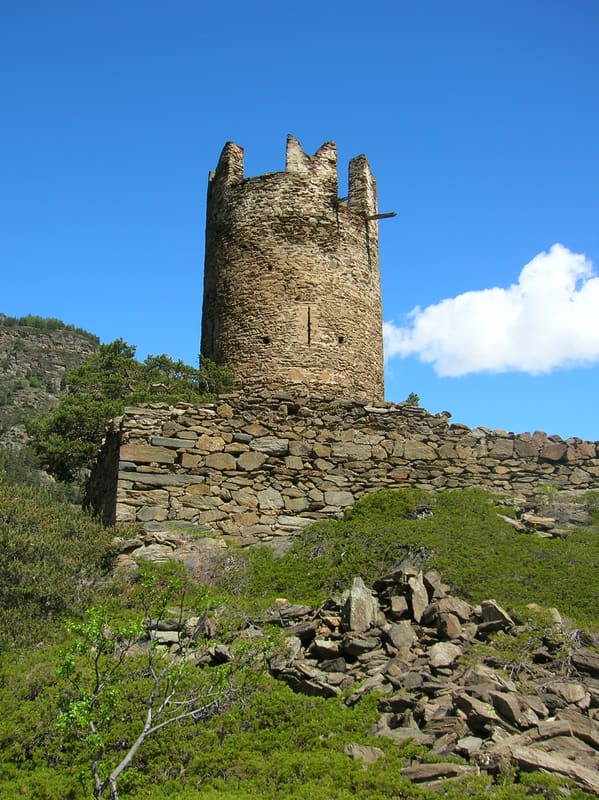
The cylindrical tower of 1271 still keeps its swallowtail merlons
The ruin can only be reached on foot, by a path that starts from the hamlet of Grand-Haury above Arvier. From a rocky spur it overlooks the mouth of the Valgrisenche, on the right bank of the Dora. Of the original structure, the cylindrical tower crowned with swallowtail merlons remains intact; around it you can make out the remains of the ring of walls.

Visiting
The castle is privately owned and the interior cannot be visited. It can only be reached on foot, by the path that starts from the village of Grand-Haury, about 10 minutes' drive from Arvier. Before going up it is advisable to check the condition of the path.
History
Montmayeur Castle, at Arvier, should not be confused with the castle of the same name in Savoy, near Villard-Sallet: it is a separate fortification, standing on a rocky spur that drops sheer to the Dora di Valgrisenche, at the mouth of the valley of the same name. The keep, the main tower, dates from 1271, the year in which Anselmo and Aimone d'Avise paid feudal homage to Philip I of Savoy for this possession; a document of the bailiff of Aosta records in 1312 a payment for construction work at the castle.
At the beginning of the fourteenth century the castle still belonged to the d'Avise lordship, but between 1309 and 1310 the Count of Savoy bought it from Aimonetto and Falcone di Montmayeur. In 1337 it is listed among the possessions administered by the bailiff of Châtel-Argent and Montmayeur, and in 1351 it still belonged to the House of Savoy. In 1359 the d'Avise family were invested with it again. In 1430 it belonged to the d'Avise brothers: in that year Montmayeur Castle, together with that of Rochefort, was still inhabited.
Besides the cylindrical keep with its swallowtail crenellation, still well preserved today, the fortress included other buildings and defensive works, most of which collapsed in the centuries after it was abandoned.
Today the castle is reduced to a ruin, privately owned, and the interior cannot be visited. It is reached on foot along a path that starts from the hamlet of Grand-Haury, near Arvier. The crenellated cylindrical tower, the best-preserved part, remains visible to those who make the climb.
Nearby
 Maison Musée Jean-Paul IIIt holds objects, stamps and coins from the 18 years of John Paul II's pontificate
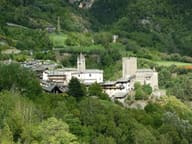 AviseThe castle, the Maison de Blonay and the Cré fortified house: three homes of the lords of Avise
 Parish Museum of Sacred ArtWooden statues and gold work from the fifteenth to the nineteenth century in the church of San Brizio
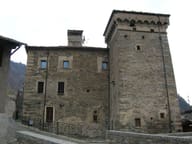 Avise CastleThe corbel room has fourteen carved wooden corbels
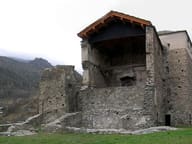 La Mothe CastleClosed since 2026 for work on the Museum of the Alpine Future, €6.5 million from the PNRR
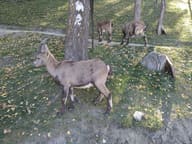 Parc Animalier d'IntrodIbex, chamois, wolves and birds of prey along a 1.5 km path with a 150 m height gain