 The Aosta Trip
Quart Castle
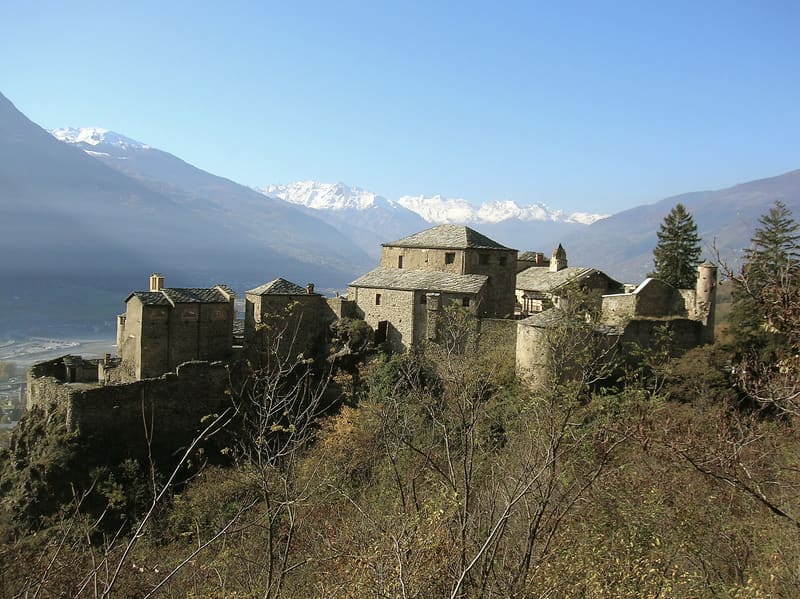
Closed for restoration: work is nearing completion, then the museum fit-out
The complex occupies a rocky spur above the hamlet of Villair, with several buildings inside a single fortified enclosure and a great tower (an isolated defensive tower) at the top. In the park grow a monumental beech and a monumental maple. The restoration work keeps the site closed to the public.

Visiting
Closed for restoration: the work is nearing completion and a museum fit-out will follow before reopening. The site is not accessible to people with disabilities. During the year there may be special openings, on dates still to be set: it is advisable to check before setting off. Path 103 starts from behind the castle, which you reach by going up from the hamlet of Villefranche in Quart; you leave the car in a small car park. The route is almost level, very panoramic, and leads towards Nus.
History
The oldest core of Quart Castle, a great tower surrounded by walls on the highest point of the rock, dates from the end of the eleventh century or, according to other narrative sources, from about 1185, when Jacques de la Porte de Saint-Ours is said to have founded the house that gave its name to the fief. The lords of Quart, descendants of this family, later enlarged the complex with the chapel and with the ‘Magna Aula’, the castle's great hall; the great tower still keeps paintings that can be dated to the late thirteenth century, the Magna Aula frescoes from the second half of the fourteenth century.
On the death of Enrico di Quart, the last heir of the family (the sources give 1377 or 1378), the castle and the fief returned to the House of Savoy. In 1550 Duke Charles II ceded it to the president Filiberto Laschis, who sold it on almost immediately to the Balbis family. In the seventeenth century it passed to Count Nicola Coardo and then to the Perrone di San Martino family, who in 1800 transferred ownership to Quart municipality.
Afterwards the castle was used for about a century as a farm building, and this use cost the building much of its original character. In the chapel, rebuilt and decorated with stucco in 1606, excavations have brought to light fragments of wall paintings from the thirteenth and sixteenth centuries.
The restoration project is published by the Aosta Valley Autonomous Region. The restoration work is divided into two phases: the second began in late spring 2021 and is nearing completion. After final inspection the castle will receive a museum fit-out and will then reopen to the public; the reopening date has not yet been announced. For now the site remains closed, except for special openings.
Nearby
- Ru PompillardChannel from 1409 carrying the water of the Buthier from Valpelline to the hills of Quart
 Saint-Marcel CastleIt stands on the road to the valley of the old iron, copper and manganese mines
 Tsatelet Nature ReserveOn the summit, a late Neolithic settlement from around 3000 BC and its necropolis
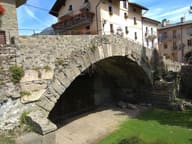 Aosta Roman BridgeIts single arch, 17 metres wide, now spans a dry bed
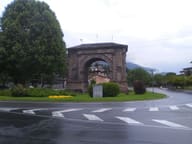 Honorary Arch of AugustusSingle archway 11.40 metres high, now in the middle of a roundabout
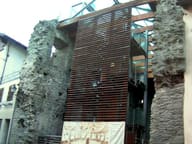 Pilate's CastleTwo corner turrets and three of the four perimeter walls in exposed stone remain