 The Aosta Trip
Saint-Marcel Castle
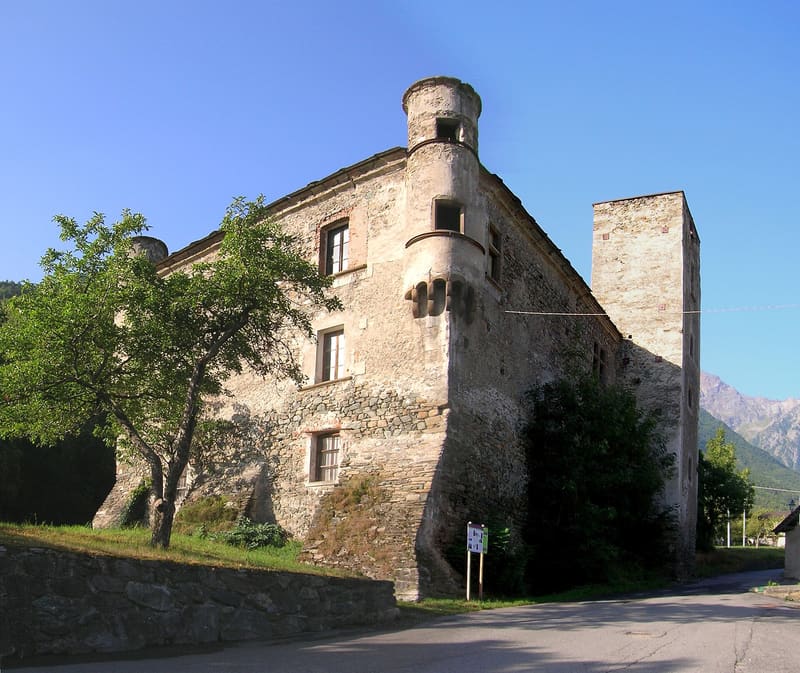
It stands on the road to the valley of the old iron, copper and manganese mines
It stands on a plateau at the foot of the alluvial fan of the Saint-Marcel stream, at a point where the routes along the valley cross the side valley leading to the old iron, copper and manganese mines. The structure, in a poor state of repair, shows the signs of long abandonment.

Visiting
Closed to the public for restoration work: the structure is in a poor state of repair and you cannot go inside. No reopening date has been announced; information from Saint-Marcel municipality.
History
Saint-Marcel Castle stands on a plateau at the foot of the alluvial fan of the stream of the same name, at a point where the routes along the valley cross the side valley of the old iron, copper and manganese mines. It probably originated in the fourteenth century and is linked to the history of the Challant family.
The building takes the form of a ‘single-block castle’, a late type of castle-residence.
In the seventeenth century the castle passes to the Bianco di San Secondo family; in the eighteenth century it passes to the Società esploratrice delle miniere, linked to mining in the area.
After becoming the property of Saint-Marcel municipality in the twentieth century, the castle remains abandoned for a long time and the structure is left damaged, in a poor state of repair. Work promoted by the regional Department of Education and Culture, through the Superintendency, has begun initial measures to make the most deteriorated parts safe. The castle remains closed to the public today.
Nearby
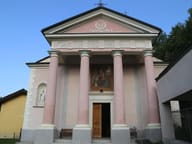 Plout SanctuaryA Greek-cross sanctuary of 1851, with the wooden statue of the Virgin donated in 1744
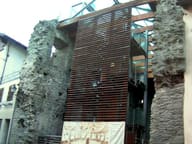 Pilate's CastleTwo corner turrets and three of the four perimeter walls in exposed stone remain
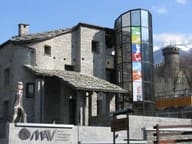 MAV - Museum of Traditional Aosta Valley CraftsThe more than 500 works of the Brocherel collection open the route, in the Memory room
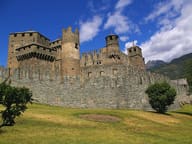 Fénis CastleIn the courtyard, a semicircular staircase beneath the fresco of St George and the Dragon
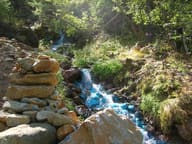 Eve Verda (Green Waters)The stream bed is covered by a turquoise copper deposit, described as early as 1749
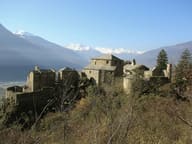 Quart CastleClosed for restoration: work is nearing completion, then the museum fit-out