 The Aosta Trip
Avise Castle
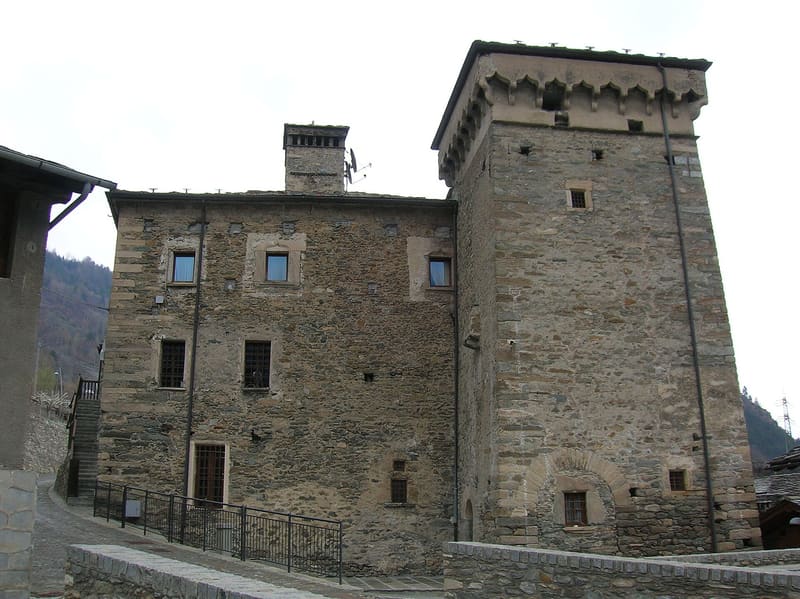
The corbel room has fourteen carved wooden corbels
You reach it from the main village, on the left-hand side as you enter the village: a three-storey building flanked by a crenellated quadrangular tower. Inside, now occupied by a restaurant, there remain the large hall with a fireplace, the strongroom and the corbel room with fifteenth-century animals and figures carved in wood.

Visiting
It cannot be visited freely: it is private property. You can see it from outside, from the main village of Avise. You can see the interior as a customer of the restaurant Le Boniface d'Avise, which has its own opening hours, different in summer and in winter: it is advisable to ask the restaurant before going.
History
The castle was built at the end of the fifteenth century, around 1492, at the wish of a member of the local lordship of Avise: some sources attribute it to Bonifacio d'Avise, others also leave open the possibility of Rodolfo d'Avise, and the doubt remains. It is more a fortified house, the fortified house of a noble family, than a castle built for defence: a three-storey building flanked by a quadrangular tower with decorative corbels.
On the main door the family motto still survives, ‘Qui tost Avise tart se repent’ (whoever decides in haste repents late), a play on the name Avise. The interiors keep the noble taste of the late fifteenth century: a large hall with a fireplace, frescoes, and the so-called ‘hall of the corbels’, with fourteen carved wooden corbels depicting animals, monstrous figures and people in fifteenth-century dress.
Restored, the castle lost its original residential function long ago: today it houses a restaurant and accommodation business, and is opened occasionally for temporary exhibitions. It cannot be visited freely.
Nearby
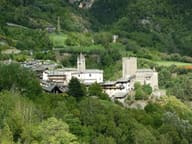 AviseThe castle, the Maison de Blonay and the Cré fortified house: three homes of the lords of Avise
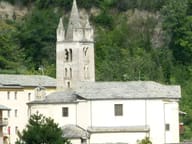 Parish Museum of Sacred ArtWooden statues and gold work from the fifteenth to the nineteenth century in the church of San Brizio
- Ru de CharbonnièreRu that takes its water from the Vertosan stream; view of Emilius, Becca di Nona and Grivola
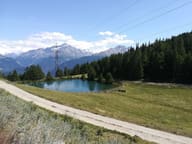 Lago di JouxA small lake in a pine wood at 1,902 m, with a little chapel in a nearby clearing
- Saint-Nicolas Cross-Country TrailsAt Fossaz a 2.5 km loop is floodlit and you can ski in the evening too
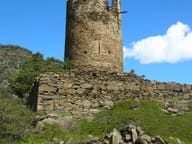 Montmayeur CastleThe cylindrical tower of 1271 still keeps its swallowtail merlons