 The Aosta Trip
Parish Museum of Sacred Art
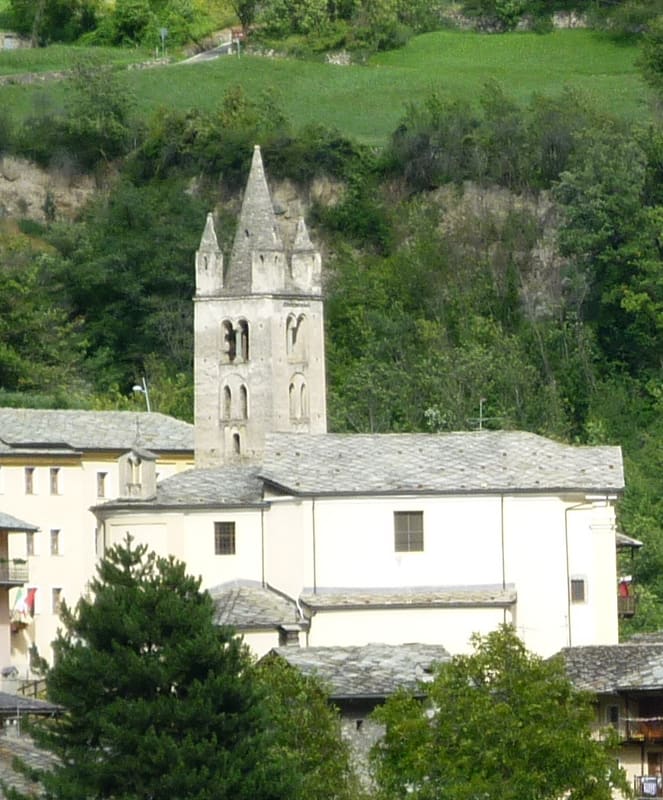
Wooden statues and gold work from the fifteenth to the nineteenth century in the church of San Brizio
The museum occupies the first chapel of the right aisle of the church of San Brizio, fitted out in 2007 by the parish with the Soprintendenza. The display cases hold wooden statues and liturgical objects from the church and from the chapels of the hamlets of Avise, from Runaz to Charbonnière, together with a collection of gold work from the fifteenth to nineteenth centuries and fragments of stained glass from the earlier Gothic church.

Visiting
Open every day 8:00–16:00, inside the parish church of San Brizio, in the locality of Capoluogo. Free admission. During church services the hours may change: it is best to ask on site or to phone the parish (0165 91102 / 0165 99079).
Collections
Goldsmiths' work display cases. The first display cases, in the chapel set up as a museum, show a substantial collection of liturgical goldsmiths' work from several periods together with a textile probably made by an Italian workshop active around the mid-eighteenth century.
Wooden statues. The sculptural core includes statues of saints from the mother church and the hamlet chapels: the statue of St James, from the Runaz chapel and recognisable by the shell, symbol of the pilgrimage to Santiago de Compostela; the statue of St Theodulus, patron of the Cerellaz chapel; and a sculptural group with a Pietà together with statues of a bishop saint and St Lawrence, from the chapel of San Lorenzo and Santa Barbara at Charbonnière.
The Vedun crucifix. Among the oldest pieces is what was the original crucifix of the church of Avise, later moved to the Vedun chapel, where it is now one of the most significant furnishings.
Traces of the Gothic church. The collection is completed by fragments of painted stained glass from the earlier Gothic church of Avise, dated 1530 by an inscription, depicting Grat-Humbert d'Avise kneeling before the Crucifixion.
The museum does not currently hold temporary exhibitions: the works on display remain those of the permanent 2007 layout.
History
According to local tradition, the church of Avise originally stood on the Roman road and was dedicated to St Martin of Tours; it is said to have been destroyed together with the village of Runaz by passing troops between the ninth and tenth centuries. It was then rebuilt on the other side of the Dora Baltea, less exposed to raids, and dedicated to St Brice, disciple and successor of St Martin. In 1400 two benefactors, both named Antoine d'Avise (uncle and nephew), had the bell tower built by master Pierre Sella; the present church, in neoclassical style, was consecrated in 1869 and decorated inside with nineteenth-century frescoes.
Over the centuries the church and the chapels of the hamlets in the Avise area (Vedun, Charbonnière, Cerellaz, Runaz) built up a heritage of statues, liturgical objects and goldsmiths' work: among the oldest pieces are wooden statues of saints such as St James, recognisable by the shell of the pilgrimage to Santiago de Compostela, and St Theodulus, patron of Cerellaz, as well as the oldest crucifix of the church of Avise, later moved to the Vedun chapel. To these were added in the following centuries a substantial collection of goldsmiths' work and a liturgical textile attributed to an Italian workshop of the mid-eighteenth century; there are also fragments of stained glass from the earlier Gothic church, dated 1530 by an inscription, depicting Grat-Humbert d'Avise and the Crucifixion.
These works, for centuries scattered between the mother church and the village chapels and exposed to the risk of decay and theft, were brought together in a single space in 2007, when the parish of San Brizio, in collaboration with the offices of the Soprintendenza per i beni e le attività culturali della Valle d'Aosta, set up the parish museum of sacred art in the first chapel of the right aisle. The initiative is part of a wider regional project of parish museums spread across the Aosta Valley, created to make the heritage of mountain churches accessible and keep it safe.
Today the museum is still run by the parish and you visit it together with the church of San Brizio.
Nearby
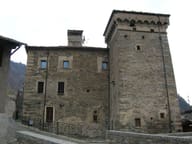 Avise CastleThe corbel room has fourteen carved wooden corbels
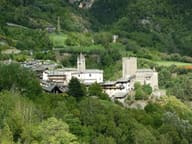 AviseThe castle, the Maison de Blonay and the Cré fortified house: three homes of the lords of Avise
- Ru de CharbonnièreRu that takes its water from the Vertosan stream; view of Emilius, Becca di Nona and Grivola
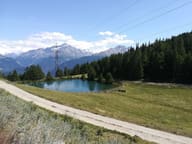 Lago di JouxA small lake in a pine wood at 1,902 m, with a little chapel in a nearby clearing
- Saint-Nicolas Cross-Country TrailsAt Fossaz a 2.5 km loop is floodlit and you can ski in the evening too
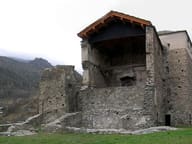 La Mothe CastleClosed since 2026 for work on the Museum of the Alpine Future, €6.5 million from the PNRR