 The Aosta Trip
Saint-Vincent Spa
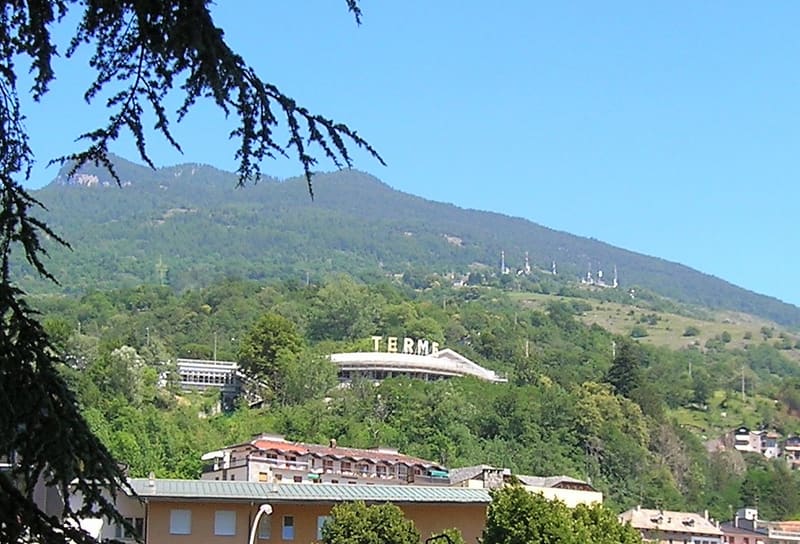
Water from the Fons Salutis spring, discovered in 1770; outdoor pools at 36 °C
The building stands on the slope above the town, with the word ‘TERME’ on the roof, visible from the centre. Inside there are three pools at 34, 32 and 25 °C; outside there are pools at 36 °C looking out over the Dora valley; then three saunas, a Turkish bath, an ice cascade and a terrace with three small jacuzzis.

Visiting
Open every day of the year: Monday to Thursday 10:00–21:00, Friday and Saturday 9:00–23:00, Sunday 9:00–21:00. Adults €49 for 4 hours Monday to Friday, €59 at weekends and on public holidays, evening (last 3 hours) €39; from 24 December to 6 January €65. Kit not included (bathrobe €6, towel €5, slippers €4). Ages 10 and over, with ID; booking required, payment on site.
History
The spring was discovered on 20 July 1770 by the abbé Jean-Baptiste Perret, son of a local notary and a natural sciences enthusiast. According to tradition he had noticed that the cows at pasture sought out a trickle of salty water that came out of a rocky spur in the Vagnod valley, at an altitude of 670 metres and about 750 metres from the town, leaving a reddish deposit on the stones. The water was named Fons Salutis. In 1778 the Savoyard court sent the engineer De Buttet and the physician Gioanetti of the University of Turin: the first analysis dates from 8 July 1778, and the engineer's report proposed covering the spring with a small masonry building set against the rock. As early as 1771 the plaque on the new Montjovet road recorded that it had also been opened for the use of the spa.
In 1797 Benedetto Maurizio, Duke of Chablais and brother of King Victor Amadeus III, is recorded at the Vagnod fountain. In 1808 the parish priest Jean-Baptiste Freppaz bought the land with a small ruined building and in 1820 ceded it to the municipality, which still owns it. New investigations proposed by the engineers Ripert in 1822 and Despines in 1826 led to new excavations, and by the end of the 1830s two springs were known. In the early nineteenth century Queen Maria Teresa, wife of Victor Emmanuel I, and the princesses her daughters came to drink the water; from 1840 to 1844 the fountain keeper's register counts hundreds of drinkers every season, among them landowners, clergymen, lawyers, soldiers and bankers. In 1846 the municipality added a storey to the spring building and placed a plaque in memory of Perret on the neoclassical pediment. Later guests included Queens Maria Adelaide and Margherita, Ferdinand, Duke of Genoa, Prince Louis Napoleon, Danilo of Montenegro and Giosuè Carducci; Silvio Pellico, according to some accounts, stayed several times in the parish house between 1843 and 1850.
On 16 June 1900 the funicular that runs from the town to the spring was inaugurated: it was built by the Turin engineer Battista Diatto to a design by the engineer Ernesto Strada, 263 metres of track and a height difference of 62 metres. Diatto also built the medieval-inspired complex of the valley station, with a Moorish-style doorway. In the same year the Hôtel de la Source was built, linked to the spring by a park, and in 1908 the Grand Hôtel Billia, with its own hydrotherapy establishment; in 1911 a large hall was added to the spring, again designed by Strada. From 1916 the salts extracted from the water were sold and advertised in the national newspapers, and in 1929 Saint-Vincent was recognised as a health and holiday resort.
Between the wars, taking the waters lost its elite clientele: in 1936 the podestà wrote that the place was a small town ‘only two months a year’. After the war the Casino, which would become the town's main attraction, opened, and the municipality decided to build a new establishment. The ‘Nuove Fonti’, designed by the engineer Gaspare Pestalozza, were inaugurated on 30 July 1960 at the edge of the park, opposite the old spa, where the funicular arrives: about 2,600 square metres, a large pump room enclosed by glass walls, a white marble staircase and, on the lower floor, a semicircular restaurant hall with a terrace over the valley. The old Fons Salutis building was not demolished, but fell into disuse.
In the 1970s and 1980s the spa, run directly by the municipality, went through a period of stagnation, with drinking cures and inhalation treatments. In 2007 the municipality put it out to tender as a project-finance scheme for about €20 million and thirty years of management: Bonatti of Parma won, work began in September 2010 and the renovated spa, with the new wellness centre, was inaugurated on 16 June 2012. Since June 2014 it has been run by the Società Terme di Saint-Vincent; in 2024 it recorded about 41,600 admissions. The restoration of the old Fons Salutis and the Hôtel de la Source was planned as a second phase, but in 2020 the old establishment was still recorded as abandoned.
Nearby
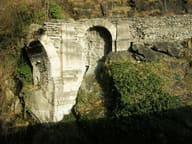 Saint-Vincent Roman BridgeThe central arch collapsed on 8 June 1839: the left abutment and part of the right remain
- Casinò de la ValléeOpened on 29 March 1947 in the Grand Hôtel Billia; today 3,500 m² and over 400 slots
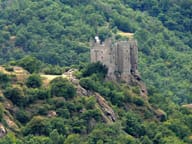 Ussel CastlePassed to the Region in 1983; linked to Marcel Bich, the Bic pen baron
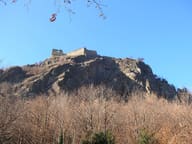 Saint-Germain CastleFrom 1438 a Savoyard garrison was stationed here, moved to Forte di Bard in 1661
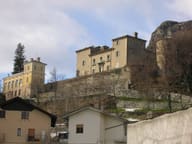 Passerin d'Entrèves CastlePrivate castle; entry to the park with monumental trees is free
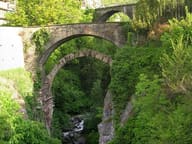 Châtillon Roman BridgeThe Roman abutments, with a 15-metre arch, still carry the bridge over the Marmore