 The Aosta Trip
Exhibition Centre of the Aosta Valley Mining Park and the Cogne Mine
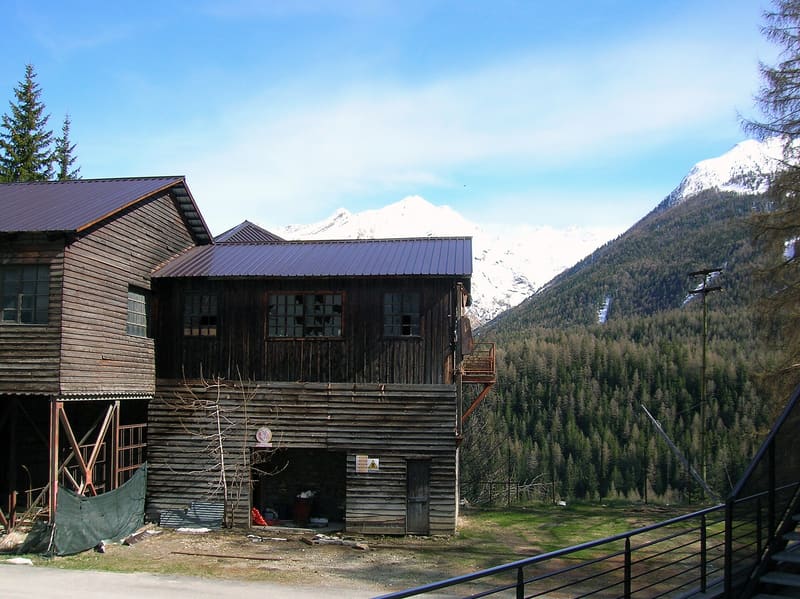
Magnetite and the life of the Colonna miners, in the rooms of the Miners' Village
The centre occupies the main building of the Miners' Village, facing the square, and the adjacent one where the cableways of the old mine used to arrive. Inside, the route describes the workplaces, the magnetite extracted, how it was transported and processed, and the daily life of the miners in the villages of Colonna and Costa del Pino. It is linked to the mine tour, where a historic small train from the 1950s runs through 1.5 km of tunnels at a constant 7 degrees.

Visiting
Opening hours 9:30–12:00 and 15:00–18:00, closed on Tuesdays. From 13 June to 6 September open every day except Tuesdays; from 7 September weekends only; closed in October and November; reopens in December for the holidays. Full price €10, concession €8 (under-14s, over-65s, groups of 8+, school groups, Aosta Valley residents from June to September); free for people with disabilities and children under 4. Guided tours are also available in the mine.
Collections
The centre and the story of the Aosta Valley mines. The exhibition centre occupies the main building of the Villaggio Minatori (or Villaggio Anselmetti) in Cogne, partly in the area where the ore cableway once arrived. The exhibition opens with an overview of the main mining areas of the Aosta Valley (Brusson, Cogne, La Thuile, Ollomont, Saint-Marcel) and then focuses on magnetite, the iron ore mined at Cogne from altitudes among the highest in Europe, on the slopes of Monte Creya.
The mining villages: Colonna and Costa del Pino. One section reconstructs life in the two settlements linked to the mine. Colonna, at about 2,400 metres, was for decades a real permanent village with a shop, a library and a cinema, inhabited until the 1970s and not open to visitors today. Costa del Pino, lower down at around 2,000 metres, was the operational heart of the mining complex and is the part visitors can reach today.
Transport: cableways and train. The exhibition covers the systems used to bring the ore down the valley: remains of the cableways that carried the material, the passenger funicular that linked Cogne to Colonna and the railway to Acque Fredde. On display is a wagon of the Drinc train, the small train once used in the mine and now also used for the guided tours of the tunnels.
The mine experience. The centre recreates the underground environment (the tunnels, the cold, the noise of the explosions) with interactive exhibits: you can operate the ‘pistols’ once used by the miners, fill the train wagons and simulate a blast in a tunnel reconstructed in 3D. The visit to the centre is the above-ground complement to the train trip into the mine run by the Cooperativa Mines de Cogne.
Temporary exhibitions. The centre periodically hosts themed exhibitions, which change over time.
History
The magnetite mines of Liconi, Colonna and Costa del Pino, above Cogne, probably date from the time of the Salassi and the Romans. In the Middle Ages their exploitation came under the control of the bishop of Aosta, until in 1679 Bishop Bailly sold the rights to the mines to Cogne municipality. There followed a long period of little activity, for lack of capital and labour, until the mayor César-Emmanuel Grappein, in the first half of the nineteenth century, had a 6 km carriage road built between Champlong and Vieyes, completed in 1824, and introduced a fairer sharing of the profits among the inhabitants of Cogne.
The crisis in the iron and steel industry in the mid-nineteenth century led the municipality to grant concessions on the deposits. Exploitation remained limited until the early twentieth century, when Belgian entrepreneurs took over the mines and began a real industrialisation: in 1910 the Colonna miners' village was built at 2,425 metres, next to the highest iron mine in Europe, able to house about 400 workers. A small train carried the ore from the tunnels to Eaux-Froides, from where a cableway lowered it to the steelworks in Aosta.
Under Fascism the State nationalised the mines, entrusting them to the Società Anonima Nazionale Cogne; exploitation continued at full capacity under various managements until the 1960s. A severe crisis in 1970 forced a cut in production and in March 1979 the mines closed for good. What remains, as evidence of industrial archaeology, are the cableways, the buildings of the miners' village (which had a shop, a library and even a cinema) and the remains of the installations at Colonna and Costa del Pino.
Cogne municipality took back ownership of the site in 2014. As part of the Interreg Alcotra project ‘Mi.Mo, Mines de Montagne’, a two-level exhibition centre devoted to the history of the mine was set up in the old miners' village (Anselmetti area); it was inaugurated on 18 December 2021 and has been open to the public since 27 December 2021. Since 2019 you can also visit the actual tunnels of Costa del Pino: you travel about 1.5 km on a historic train to the end of the haulage tunnel and continue on foot inside the mountain.
Nearby
 Gran Paradiso – Cogne Visitor CentreTaxidermy wolf and ibex and VR headsets in the Villaggio Minatori in Cogne
 Maison de Cogne Gérard Dayné Ethnographic MuseumThe beu, the cowshed where people and animals lived together to keep warm
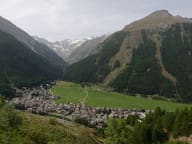 CogneThe main village looks onto the Sant'Orso meadow, at 1,544 m in the Gran Paradiso
 Permanent Exhibition of Bobbin Lace ‘I merletti di Cogne’The lace is woven on wooden bobbins, up to eighty at a time, on a pillow
 Cogne Cross-Country TrailsIn 2025 the Prati di Sant'Orso hosted three cross-country World Cup races
 CogneFrom the village a gondola climbs the wooded slopes of the Montseuc, among north-facing runs