 The Aosta Trip
Cogne
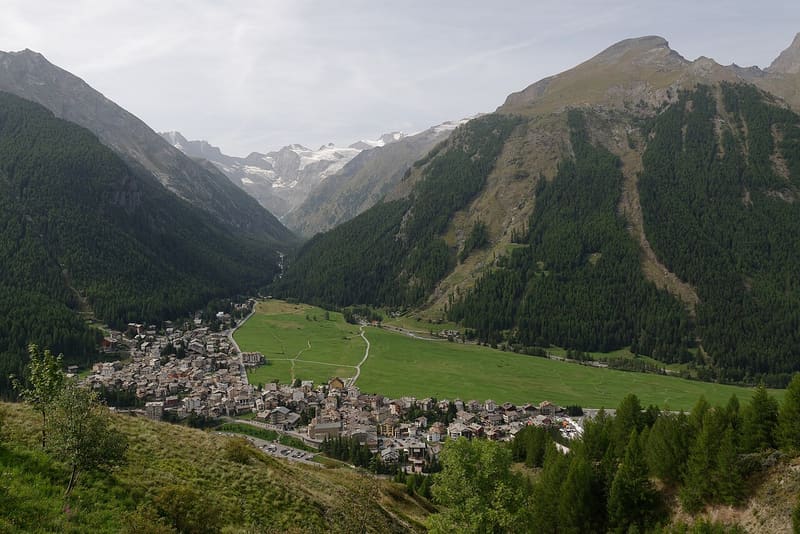
The main village looks onto the Sant'Orso meadow, at 1,544 m in the Gran Paradiso
The village lies at 1,544 metres on the edge of the Sant'Orso meadows, almost 50 hectares mown in summer for hay and used in winter for cross-country skiing, with a walking route of about 2 km. Next to the church of Sant'Orso, with its bell tower of 1840, stands the royal castle, of episcopal origin and now a private home. On the slope above the main village lies the village of Gimillan, from which you can see the whole of Cogne.

Visiting
The village is always accessible and you get around it on foot, between the centre, the church and the Sant'Orso meadows, with a route of about 2 km around the meadow. The royal castle is a private home and can only be seen from outside. The museums, the mining park and the Park visitor centre have their own entries with opening hours and tickets.
History
According to popular tradition, it was St Ursus, an Aosta Valley priest who lived between the seventh and eighth centuries, who reclaimed the Cogne basin, which legend then described as a forest full of wolves and bears. What is certain is that the parish, dedicated to him, already depended in 1184 on the collegiate church of Sant'Orso in Aosta, which held it until 1820, when all rights passed to the bishop. The bishops of Aosta were also the temporal lords of Cogne: the castle next to the church dates from the beginning of their lordship, between the twelfth and thirteenth centuries.
The magnetite mines, probably already worked by the Salassi and the Romans, first appear in a deed of sale of 1432, which mentions the ore of Liconi and names the bishop as owner of mines and furnaces. Long disputes followed between the bishop and the community, which claimed the right to mine, until in 1679 Bishop Antoine-Philibert Bailly sold the mines to the municipality for 300 Spanish gold doubloons. In the same century the church took on its present appearance, after the enlargement of 1642; between the sixteenth and eighteenth centuries the villages acquired chapels: Sonvilla in 1524, Gimillan with a bequest of 1654, Tarabouque in 1657, Montroz rebuilt in 1711.
In the first half of the nineteenth century the doctor César-Emmanuel Grappein, twice mayor and director of the mines, had a cart road of about 6 km built between Champlong and Vieyes, finished in 1824, and introduced a fairer division of the earnings among the inhabitants. In the middle of the century the crisis in the iron and steel industry led the municipality to grant the deposits as a concession. Meanwhile, in 1856, Victor Emmanuel II declared these mountains a royal hunting reserve to save the ibex, by then almost extinct, created a corps of wardens and had mule tracks laid out that are still in use today; he bought and rebuilt the castle of Cogne to stay in during the hunts. In 1919 or 1920 (the sources disagree) Victor Emmanuel III donated the reserve to the State so that a park could be created, and on 3 December 1922 Gran Paradiso National Park was established, the first in Italy.
In the twentieth century industry arrived. In 1903 the Belgian Alfred Theys set up a company, from 1907 the Società Anonima Miniere di Cogne, and in 1910 work began on the mining village of Colonna, at 2,425 metres, the highest iron mine in Europe, with lodgings for about 400 workers, a church, a cinema and a canteen. In 1917 the mines passed to Ansaldo, which built the electric steelworks in Aosta and a narrow-gauge railway of 11.6 km, 8.2 of them in a tunnel under the Colle del Drinc. In 1927 the State entrusted them to the Società Anonima Nazionale Cogne; in 1940 a thousand miners worked there, extracting 350,000 tonnes. After the crisis of 1970 production fell and in March 1979 the mines closed; since 2017 the Costa del Pino tunnels can be visited with a guide.
Nearby
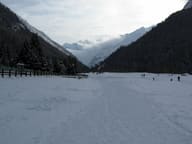 Cogne Cross-Country TrailsIn 2025 the Prati di Sant'Orso hosted three cross-country World Cup races
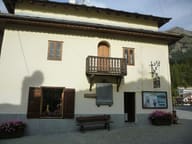 Permanent Exhibition of Bobbin Lace ‘I merletti di Cogne’The lace is woven on wooden bobbins, up to eighty at a time, on a pillow
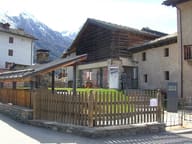 Maison de Cogne Gérard Dayné Ethnographic MuseumThe beu, the cowshed where people and animals lived together to keep warm
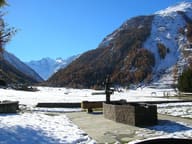 CogneFrom the village a gondola climbs the wooded slopes of the Montseuc, among north-facing runs
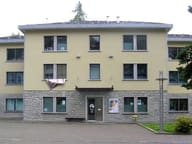 Gran Paradiso – Cogne Visitor CentreTaxidermy wolf and ibex and VR headsets in the Villaggio Minatori in Cogne
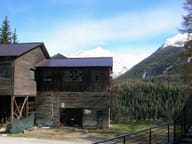 Exhibition Centre of the Aosta Valley Mining Park and the Cogne MineMagnetite and the life of the Colonna miners, in the rooms of the Miners' Village