 The Aosta Trip
Maison de Cogne Gérard Dayné Ethnographic Museum
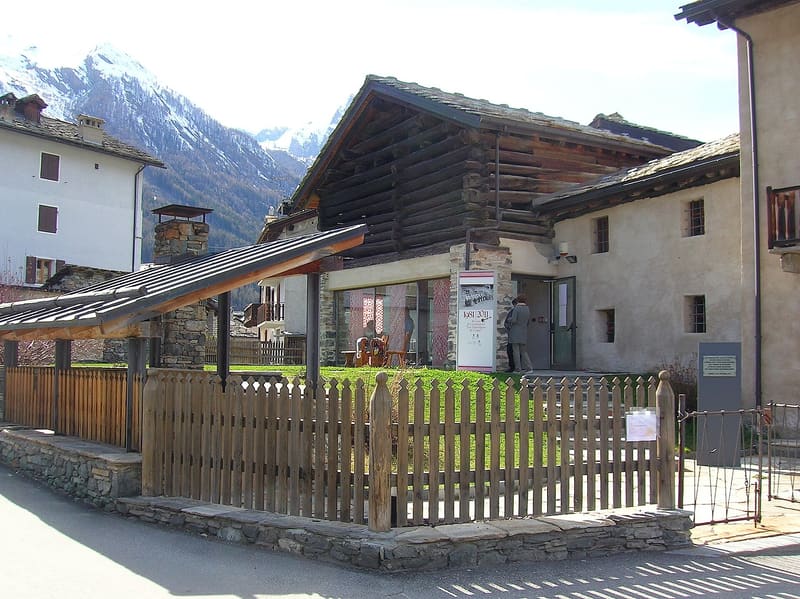
The beu, the cowshed where people and animals lived together to keep warm
The building, eight structures joined in an L shape on rue Sonveulla, took on its present appearance during the nineteenth century. The guided tour shows the beu, the stable where people and animals lived side by side to keep each other warm, the mézòn de fouà, partly built in stone and used for preparing food, the cellars and the hayloft on the upper floor. Panels and objects donated by the residents tell of the wood and stone architecture of the Cogne valley and of everyday life in the past.

Visiting
From 13 June to 6 September open on Wednesdays and Fridays 15:00–18:00, on Saturdays, Sundays and public holidays 10:00–12:00 and 15:00–18:00; closed on Mondays and Tuesdays. Admission: full price €6, concession €4 (under-14s, groups of at least 8 people, over-65s). For opening hours outside the season it is best to ask Cogne municipality (0165 753800, info@comune.cogne.ao.it).
Collections
The cor. The entrance of the house is the cor, the covered space typical of Cogne houses that led to the various building units, sheltering from the cold those who passed through it.
The beu. It is the central space of the house, the cowshed where people and animals lived side by side: the warmth of the livestock also heated the nearby living spaces, following an arrangement common to all the high-altitude rural houses of the valley.
The mézòn de fouà. Built partly of stone to limit the risk of fire, it was the room where food was prepared, in particular dairy products: tools for processing milk and making fontina, the typical cheese of the valley, are displayed here.
The cellars. The underground levels of the house hold the cellars, used for the seasonal storage of food and provisions during the long winter.
The hayloft. The large hayloft on the upper floor, once used for livestock fodder, now holds temporary photographic exhibitions in the summer months, which change from year to year.
The Ceriana collection rooms. Since 2011 two rooms have been devoted to the Ceriana collection, a group of objects that adds to the ethnographic route alongside the collection of traditional Cogne costumes displayed in the house.
History
The oldest core of the house that now holds the Cogne ethnographic museum dates from the seventeenth century, when the Cogne valley was inhabited by families of livestock breeders and farmers who built their houses by adding, over time, several wooden and stone structures as their needs required. The building, on rue Sonveulla, takes its name from the Gérard and Dayné families, among the most common surnames in Cogne, who owned it over the centuries.
During the nineteenth century the house took on its present appearance: eight structures joined to form an L-shaped plan, typical of the rural buildings of the valley, with the beu, the stable where people and animals lived side by side to keep each other warm in the cold months, the mézòn de fouà, partly built in stone and used for preparing food, underground cellars and a large hayloft on the upper floor.
The house was later restored as a municipal ethnographic museum: the restoration preserved its original structure and turned it into an exhibition space open to the public. Inside are objects donated by the people of Cogne themselves, which tell of the traditional architecture of the valley and of everyday life in the past, together with a collection of local costumes.
In 2011 the exhibition route was expanded with the Ceriana collection, displayed in two dedicated rooms, while the hayloft is now used for temporary photographic exhibitions held in the summer months. The museum, run at first by the Fondation Grand Paradis, is now entrusted to the Mines de Cogne cooperative, which organises the guided tours together with those of the nearby mining park.
Nearby
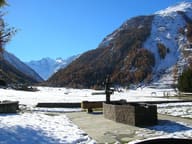 CogneFrom the village a gondola climbs the wooded slopes of the Montseuc, among north-facing runs
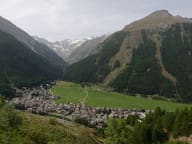 CogneThe main village looks onto the Sant'Orso meadow, at 1,544 m in the Gran Paradiso
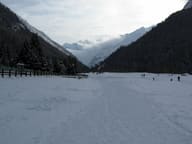 Cogne Cross-Country TrailsIn 2025 the Prati di Sant'Orso hosted three cross-country World Cup races
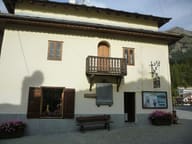 Permanent Exhibition of Bobbin Lace ‘I merletti di Cogne’The lace is woven on wooden bobbins, up to eighty at a time, on a pillow
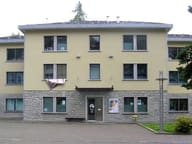 Gran Paradiso – Cogne Visitor CentreTaxidermy wolf and ibex and VR headsets in the Villaggio Minatori in Cogne
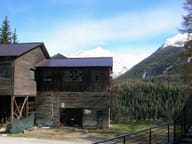 Exhibition Centre of the Aosta Valley Mining Park and the Cogne MineMagnetite and the life of the Colonna miners, in the rooms of the Miners' Village