 The Aosta Trip
Gran Paradiso – Cogne Visitor Centre
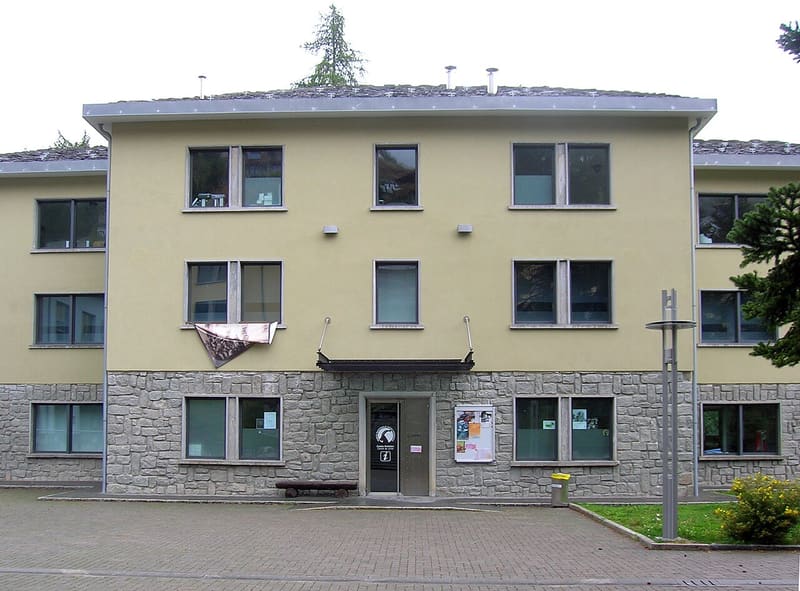
Taxidermy wolf and ibex and VR headsets in the Villaggio Minatori in Cogne
The Gran Paradiso National Park's ‘TutelAttiva Laboratorio Parco’ centre occupies a building of the former Villaggio Minatori. Three routes (Water, Woodland and pasture, Wildlife and people), with spaces devoted to the wolf and the ibex, taxidermy specimens, bone-conduction listening stations and virtual reality headsets. It is designed above all for children.

Visiting
Open in summer and during the Christmas holidays: from 20 July to 23 August every day 9:00–13:00 and 14:00–18:00; between late June and 19 July and from 24 August to early September 14:00–18:00, closed on Wednesdays; 5–8 December and 26 December–6 January 14:00–18:00. For the rest of the year, guided tours by booking (bookeo.com/fondation-grand-paradis). Full price €3, concession €1.50, free up to the age of 6.
History
The history of the Park begins with the ibex. Firearms had wiped it out across almost all of the Alps, and in the nineteenth century fewer than a hundred were left, on the mountains of Gran Paradiso. The first act of protection was the Royal Letters Patent of 1821, which banned hunting it throughout the Savoyard kingdom. In 1856 Victor Emmanuel II turned these valleys into a royal hunting reserve: he bought the hunting rights from the valley people and the municipalities, set up a corps of guards and had huts, hunting lodges and over 300 km of mule tracks built, with steady gradients of around 8–10% so that the royal parties could ride up on horseback. Many are still walked today as Park paths.
The paradox is well known: it was the king's hunting, reserved for him alone and watched over by the guards, that saved the ibex. The last royal hunt took place in 1913. A few years later Victor Emmanuel III handed the 2,100 hectares of the reserve over to the State, on condition that a national park be created there (the transfer is dated 1919 or 1920). On 3 December 1922 a royal decree established the Gran Paradiso National Park, the first in Italy. In the same weeks the Abruzzo National Park was coming into being, opened as a private reserve as early as 9 September 1922 and recognised by the State at the start of 1923: that is why the two parks celebrated their centenary together.
The first twenty years were the hardest, with centralised management and modest results. The turning point came in 1947, when the Park Authority and its corps of park rangers were created, under the leadership of Renzo Videsott. Gran Paradiso has kept its historic rangers, whereas in the more recent national parks surveillance is the job of the forestry Carabinieri. About forty huts at altitude, used from May to October, still make it possible today to watch over the area from dawn to dusk.
All the ibex living in the Alps today, reintroduced starting from Gran Paradiso, descend from the small group that survived. Between 2,500 and 3,000 live in the Park. The other side of the coin lies in the DNA: having passed through such a narrow bottleneck, the species has almost no genetic variability, and the Park is studying how far this makes it vulnerable to epidemics.
The visitor centre occupies a building of the Villaggio Minatori, the valley-floor complex linked to the magnetite mines that closed in 1979, where the Fondation Grand Paradis, which runs the centres on the Aosta Valley side of the Park, also has its headquarters. Among the Park's awards are the European Diploma for Protected Areas of the Council of Europe and, since 2014, inclusion in the IUCN Green List, the only Italian park in that first selection.
Nearby
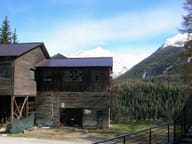 Exhibition Centre of the Aosta Valley Mining Park and the Cogne MineMagnetite and the life of the Colonna miners, in the rooms of the Miners' Village
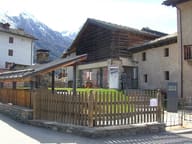 Maison de Cogne Gérard Dayné Ethnographic MuseumThe beu, the cowshed where people and animals lived together to keep warm
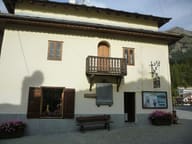 Permanent Exhibition of Bobbin Lace ‘I merletti di Cogne’The lace is woven on wooden bobbins, up to eighty at a time, on a pillow
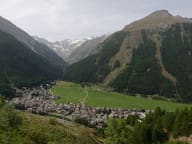 CogneThe main village looks onto the Sant'Orso meadow, at 1,544 m in the Gran Paradiso
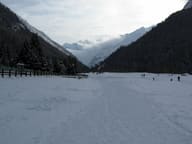 Cogne Cross-Country TrailsIn 2025 the Prati di Sant'Orso hosted three cross-country World Cup races
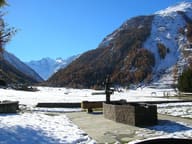 CogneFrom the village a gondola climbs the wooded slopes of the Montseuc, among north-facing runs