 The Aosta Trip
Aosta Cathedral Treasury Museum
The ivory diptych of 406: the consul Probus had the emperor Honorius carved on it
The route passes through the cathedral's ambulatory, among Romanesque and Gothic stained glass windows and gold work, including a Roman cameo set in a thirteenth-century gold mount. Next comes the Gothic section, with the reliquary of St Gratus finished by the Flemish craftsman Jean de Malines, and the diptych, two ivory tablets joined by a hinge, carved in 406 for the consul Probus, with the emperor Honorius depicted on both leaves.

Visiting
Saturdays and Sundays 15:00–17:30, last admission 17:00. In summer, from early July to early September, it opens every day with the same hours; best to check the exact dates before you set off. Treasury museum only: €4; ticket including the eleventh-century frescoes: €5. Free for under-18s, students up to the age of 25 and museum pass holders.
Collections
The ambulatory — The museum occupies the semicircular corridor behind the altar of the Cathedral of Santa Maria Assunta. Here there is a cameo from the Roman period (first century), set in gold with stones and pearls added in the thirteenth century, when the object was adapted as a clasp.
The consular diptych — It is among the oldest pieces: an ivory diptych from 406, made for the appointment as consul of Flavius Anicius Petronius Probus and depicting the emperor Honorius, later reused for liturgical purposes.
Gothic gold work — The main piece is the reliquary chest of St Gratus: begun by the goldsmith Guglielmo di Locana, who died in 1421, and completed in 1458 by the Fleming Jean de Malines. Beside it, a fourteenth-century rock crystal cross from Rhêmes and a thirteenth-century reliquary casket made in Limoges.
Sculpture — It includes fifteenth-century marble works by Stefano Mossettaz and his workshop, among them a bishop's tomb and a stone statue of St James the Great.
Wooden sculptures — They show Franco-Flemish influence through works by the local artist Jean de Chetro and by the Maestro della Pietà degli Antoniani, an anonymous sculptor.
History
Aosta Cathedral, dedicated to Santa Maria Assunta and San Giovanni Battista, has kept for centuries a treasury of goldsmiths' work, stained glass and liturgical objects linked to the diocese. One of its oldest pieces is the diptych of Probus, a carved ivory consular diptych of 406, made for the appointment as consul of Flavius Anicius Petronius Probus, a noble Roman senator; both leaves, however, depict the reigning emperor Honorius as a victorious commander, while Probus appears only in the inscription as his ‘servant’. It is the oldest consular diptych to have survived.
The work was kept, and essentially forgotten, in the Treasury's display case for more than a thousand years. A more recent restoration, in 2005, brought out the ancient cracks in the ivory.
Around the year 1000, under Bishop Anselmo, the cathedral was renewed and also received a vast cycle of frescoes in the roof space, datable to the first half of the eleventh century, with stories of St Eustace and scenes from the Old and New Testaments: one of the most extensive groups of paintings datable to around the year 1000 known today. Rediscovered in the roof space, they can now be visited together with the Treasury Museum.
The Cathedral Treasury Museum opened to the public in 1984, in the spaces of the Gothic ambulatory and of the nearby chapel of relics, as a showcase for the artistic production of the whole Aosta Valley.
Nearby
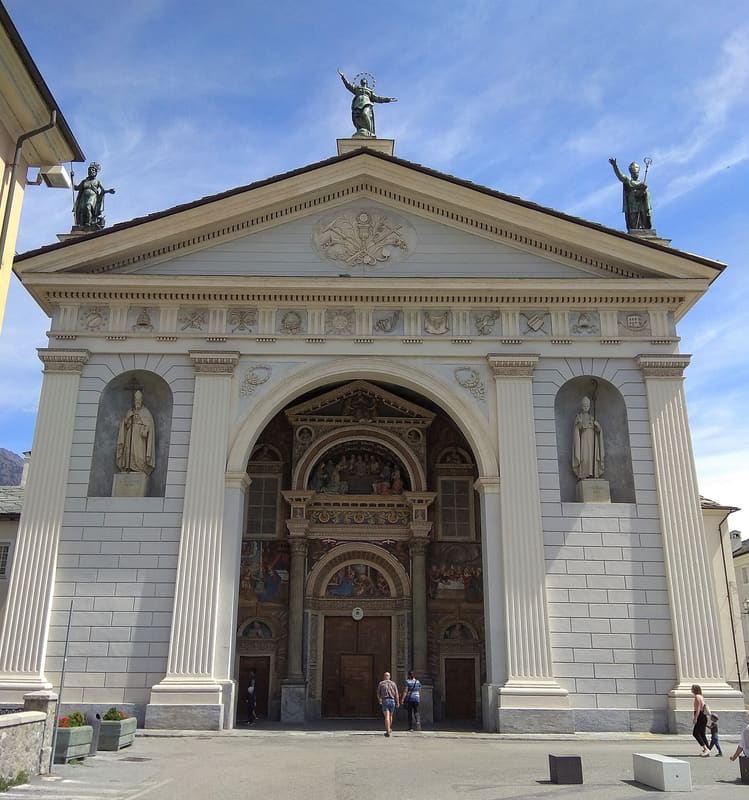
 Aosta CathedralIn the choir, two medieval mosaics: the twelve months and the four rivers of Paradise
 Forum CryptoporticusThe horseshoe-shaped galleries measure 71.80 m along the sides and 87.10 m in the centre
 MAR - Regional Archaeological MuseumIn the basement lie the remains of the Roman Principalis Sinistra gate
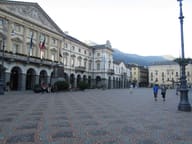 AostaOn 30 and 31 January the Sant'Orso Fair brings over a thousand artisans to the centre
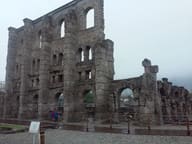 Roman TheatreSouth façade 22 metres high, with three tiers of openings that get smaller towards the top
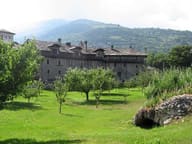 Roman AmphitheatreOf the sixty arches from the first century AD only eight remain, inside a convent