 The Aosta Trip
Vallaise Castle
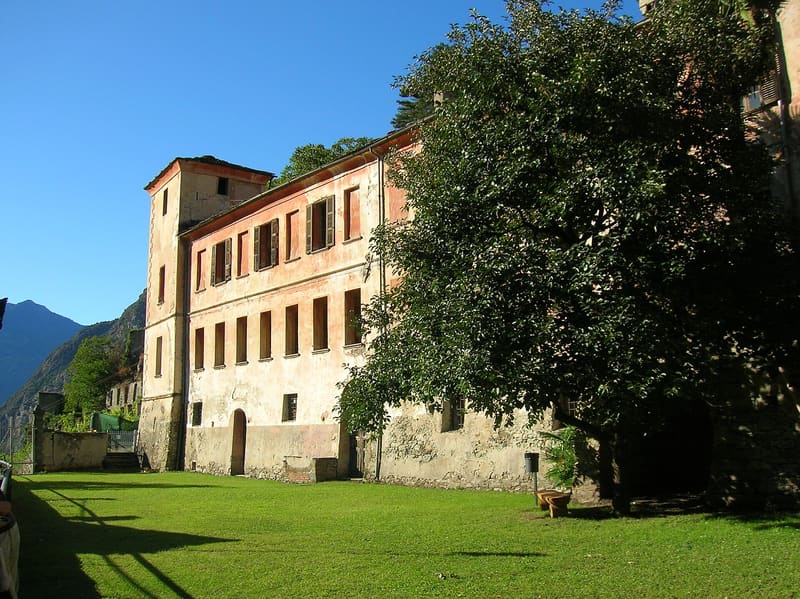
The Hall of Honour preserves ten frescoed views of the former Vallaise fiefs
The castle rises over three storeys flanked by two quadrangular towers, in a panoramic position among the vineyards of Arnad. The inner front opens onto a courtyard with a double loggia, a covered portico supported by columns of pale stone. In the park stands a hexagonal chapel with a Baroque altar in polychrome marble.

Visiting
It is not open for regular visits: restoration work is under way. You can only visit it during special openings linked to events, and the dates need to be checked each time.
History
Vallaise Castle in Arnad has medieval origins and was built in several phases. For a long time it was divided into two parts, occupied by two branches of the family: the Vallaise-Romagnano and the Vallaise-Montalto. Between 1660 and 1670 Baron Félix-Charles-François Vallaise-Romagnano turned it into a true castle, including the painted decoration of the interiors. Today the building has three storeys and two quadrangular side towers.
The most important figure of the house was Alexandre de Vallaise, foreign minister to King Victor Emmanuel I of Sardinia until his death in 1823: it was he who turned the castle into a holiday residence and gave it the character it still keeps today, with the inner courtyard opening onto a double loggia supported by stone columns and the Hall of Honour, decorated with ten views of the places that had been the family's fiefs. In the park stands a chapel with a hexagonal plan dedicated to St Joseph, St Anthony and the Virgin, with a Baroque altar in polychrome marble.
In the mid-nineteenth century the male line of the family died out and the castle was sold to Giacobini, a merchant from Turin. It then changed hands several times, until it was bought by the De Bernardi family in 1926.
In the summer of 2010 the Aosta Valley Autonomous Region acquired the whole complex, which also includes the Costa Lower Castle and the Upper Castle, or ‘Castellaccio’, and began the first restoration works, funded with EU funds and proceeds from the Lotto game. The castle is still closed to the public today, except for special events, until the restoration makes it accessible.
Nearby
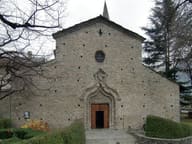 ArnadSan Martino, with three aisles, is the most important example of Romanesque in the Aosta Valley
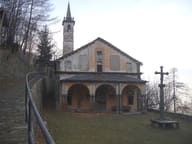 Machaby SanctuaryRebuilt in 1687, restored in 2021–2023; feast of Our Lady of the Snows on 5 August
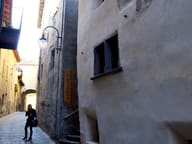 Bard VillageThe bullet holes from the Napoleonic siege of 1800 remain on Palazzo Nicole
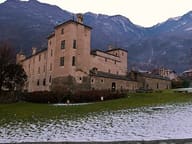 Issogne CastleIn the courtyard, the wrought-iron pomegranate fountain, a symbol of prosperity
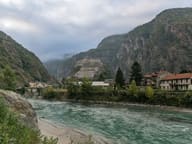 Forte di BardIt held up the Napoleonic army for about two weeks in May 1800
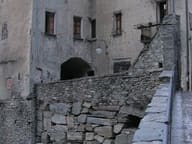 Roman Road to Gaul at BardThe substructures above the fort's car park are 16 metres high and 58 long