 The Aosta Trip
Bard Village
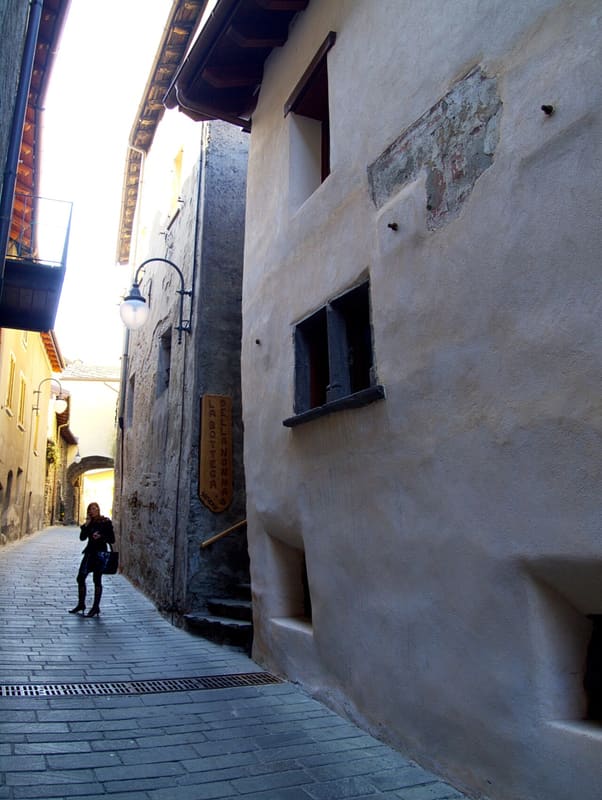
The bullet holes from the Napoleonic siege of 1800 remain on Palazzo Nicole
The village is a single uphill street, hemmed in between the Dora and the rock of the Fort, along the route of the Roman road to Gaul. On either side stand fifteenth- and sixteenth-century houses with cross-mullioned windows, two-light windows and remains of frescoed coats of arms; the entrance from the west passes under the arch of Palazzo Nicole. In the little square there is the fountain of 1598, with a stone column 170 cm high that ends in a carved head, the ‘Mascherone’.
 One-day guide · freeBard and the Road to GaulA day at the entrance to the valley passes here: the Roman road to Gaul, the village of Bard and its fort.Open the guide →
Visiting
The village is a pedestrian street at the foot of the Fort, always open. By car: from the SS 26 or the A5 motorway, exits Pont-Saint-Martin (6 km) and Verrès (9 km). Pay multi-storey car park at the foot of the Fort (daytime rate €5); free car parks: Liéron, about 300 m away, and San Giovanni, about 500 m along the SS 26, plus those in the centre of Hône. By train: Hône-Bard station, 600 m away, crossing the stone bridge over the Dora on foot; until 31 December 2026 replacement buses run on the Ivrea–Aosta line. VITA Group and Arriva scheduled buses, with stops on the SS 26.
History
The village of Bard began as a crossing settlement: the houses line both sides of the Roman consular road to Gaul, and many still rest on Roman retaining walls, visible in several cellars. Part of the Furiana channel, built by the Romans and still in use, runs beneath the main street. The rock that closes the valley was garrisoned from the early Middle Ages: at the beginning of the sixth century the Ostrogothic king Theodoric wanted the valley barriers defended by sixty soldiers, and the first explicit mention of Bard is in Liutprand of Cremona's account of the return of Arnulf of Carinthia, in 894, ‘by the way of Hannibal that they call Bard’.
From the mid-twelfth century the lordship belonged to the family of the same name, the lords of Bard, until in 1242 Amadeus IV of Savoy stormed the castle and took it from Ugo di Bard: from then on the place remained for centuries under the direct rule of the House of Savoy. The village grew rich from the traffic passing through and from the tolls, levied on all goods and carefully recorded: the entries include salt, silk and spices, but also sparrowhawks, falcons, monkeys and horses. The ‘gate’ toll was only abolished in 1783. Bard also lies on the Via Francigena: between Bard and Donnas stand the ruins of the chapel of Saint-Jean-de-la-Pierre, founded around 1150 together with a hospice by the Knights Hospitaller of St John of Jerusalem and chosen by the lords of Bard as their funerary chapel, while in 1425 the De Jordanis family founded a second hospice in the village for the poor and for pilgrims.
The houses of the village mostly date from the thirteenth to sixteenth centuries. Casa Challant, from the late fifteenth century, was the residence of Count Filiberto di Challant, castellan of Bard between 1487 and 1517, and has cross-mullioned and inverted-keel windows similar to those of Issogne Castle; Casa Valperga, from the sixteenth century, preserves a two-light window with remains of painted coats of arms, including that of the Valperga; Casa Ciuca holds a ‘viret’, a stone spiral staircase, and Casa Urbano an old mill. Palazzo Nicole, built partly over the western gate of the village, was the eighteenth-century residence of the noble Nicole family, the last counts of Bard: its chapel was frescoed in 1758 by the painter Giovanni Antonio di Biella.
In May 1800 Napoleon's Armée de réserve, having come down from the Great St Bernard Pass, was held up for more than two weeks by the garrison of the fort. The two gates of the village then had drawbridges; infantry and cavalry got round the obstacle by the Albard pass, while part of the heavy artillery was brought through at night along the village street itself. The bullet holes can still be seen on the façade of Palazzo Nicole. Among the French soldiers was the seventeen-year-old Henri Beyle, the future Stendhal, who received his baptism of fire at Bard; later, in his youth, Camillo Benso di Cavour also stayed there, before leaving his military career for politics. The fort, razed to the ground on Napoleon's orders, was rebuilt by the House of Savoy between 1830 and 1838.
Between 1856 and 1862 the new carriage road, the present SS 26, was built, and all traffic left the village street. Bard found itself isolated and declined, but precisely for this reason its houses have come down to the present day without major alterations. The De Jordanis hospice, damaged by Napoleon's passage and by a fire, was rebuilt in 1830 by the military engineers and housed the town hall until 2002, before becoming a hotel. After the Region bought the fort in 1990, the restoration project also included the new paving and lighting of the village and the restoration of four historic buildings; the fort reopened in January 2006.
Nearby
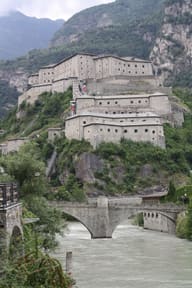
 Forte di BardIt held up the Napoleonic army for about two weeks in May 1800
 Roman Road to Gaul at BardThe substructures above the fort's car park are 16 metres high and 58 long
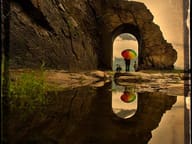 Roman Road to Gaul and Donnas ArchThe stretch cut into the rock is 221 metres long, with walls up to 13 metres high
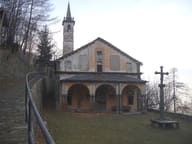 Machaby SanctuaryRebuilt in 1687, restored in 2021–2023; feast of Our Lady of the Snows on 5 August
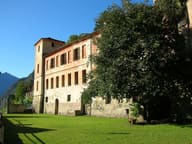 Vallaise CastleThe Hall of Honour preserves ten frescoed views of the former Vallaise fiefs
 Col FenêtreIn the meadows below the pass the rare wild peony flowers in early June