 The Aosta Trip
Forte di Bard
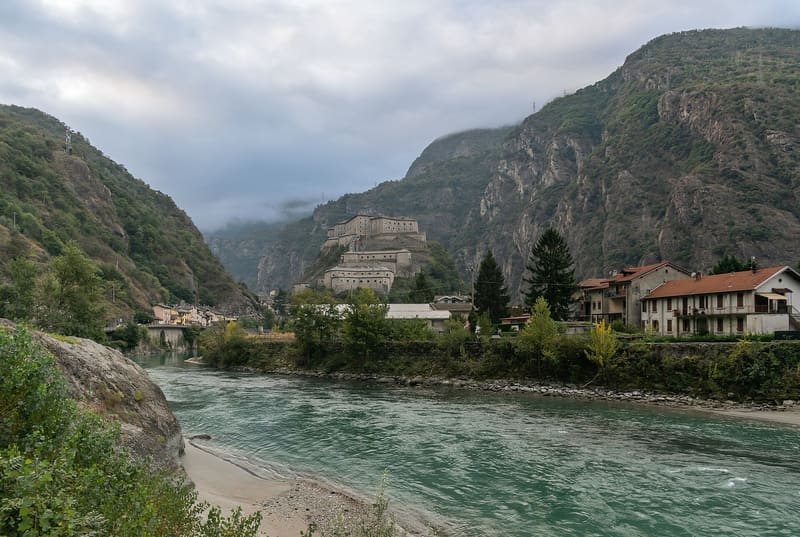
It held up the Napoleonic army for about two weeks in May 1800
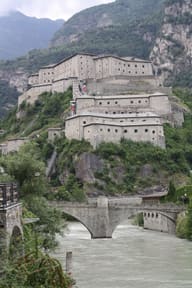
The fort occupies an entire rocky spur that closes off the valley, with three works in sequence: Ferdinando at the bottom, Vittorio in the middle, Carlo Alberto at the top. At the top, the arcaded Piazza d'Armi houses temporary exhibitions and the Museum of the Alps. Panoramic lifts rise from the medieval village to the upper works.
 One-day guide · freeBard and the Road to GaulA day at the entrance to the valley passes here: the Roman road to Gaul, the village of Bard and its fort.Open the guide →
Visiting
Opening hours: Tuesday–Friday 10:00–18:00, Saturdays, Sundays and public holidays 10:00–19:00. It is closed on Mondays, except from 27 July to 6 September, when the fort is open every day (in August from 10:00 to 19:00), and on some special opening days: it is best to check before setting off. Full price €15, concession €12 (over-65s, aged 19–25, students), free for under-18s; combined ticket for all the museums and exhibitions €24.
Collections
The Museum of the Alps occupies the first floor of the Opera Carlo Alberto and is reached by panoramic glass lifts that rise from the medieval village to the fort. The route begins with an entrance corridor where an immersive video by the artist Armin Linke projects high-altitude panoramas, while welcome messages in several languages introduce the visitor to the alpine world.
The eagle's flight: from a raised platform, a large-screen video with surround sound takes you on a simulated first-person flight from a peak of Mont Blanc to the Forte di Bard, passing over glaciers, waterfalls and castles.
The 29 rooms of the route are divided into four thematic sections – nature, geography, anthropology and meteorology – each presented by a video witness (the naturalist, the geographer, the anthropologist, the meteorologist). The nature section shows alpine fauna and the high-altitude seasons, with interactive screens and the legendary figure of the Dahu, the ibex-chimera; the geography section offers an interactive map of the peaks and reconstructs the orogeny of the Alps, from volcanic eruptions to the birth of the Dolomites from the retreat of the sea.
The anthropology section recreates traditional living spaces – a cowshed, a ‘stube’ (the heated room of mountain houses) and a school classroom – with films on work, mills and mines, alpine festivals and carnivals. The last section tells the story of the tourist discovery of the mountains, from the early Romantic mountaineering of the nineteenth century to modern skiing. A musical theme, the ‘mountain symphony’, accompanies the whole route.
The Opera Ferdinando houses Il Ferdinando, Museum of Fortifications and Frontiers, which covers over two thousand square metres and is divided into three sections. The first, in the Opera Ferdinando Superiore, uses scale models, films and authentic weapons (with clips from films such as Kingdom of Heaven and Cold Mountain) to tell the story of the evolution of alpine fortresses from Roman times to the twentieth century. The second, ‘Le Alpi Fortificate (1871-1946)’, places Bard within the system of nineteenth-century fortresses with stage-set reconstructions and models, giving space to the First and Second World Wars and to the Resistance. The third section, ‘Le Alpi, una frontiera?’, reflects on the mountains as a barrier or as a place of union.
Le Alpi dei Ragazzi, an interactive route of nine rooms designed for younger visitors, has you put on a helmet and harness like real climbers: in the first room you choose from four climber profiles, then you form roped teams for a virtual ascent of Mont Blanc made up of games and simulations; a three-dimensional reconstruction of a yeti guides the children to the last room, a mini-auditorium with a film about glaciers.
The fort's historic prisons, open to visitors, recall the military and detention role of the building. The fort also hosts temporary exhibitions.
History
The origins of the fort date from the early Middle Ages: in the sixth century a garrison of sixty armed men defended the Clausurae Augustanae, the Roman defensive system of the Aosta Valley, at this point, and in 1034 a document called the fortification ‘inexpugnabile oppidum’ (impregnable stronghold), one of the earliest written records of a castle in the valley, which was then under the control of the Viscount of Aosta.
In the thirteenth century the powerful lords of Bard, who imposed heavy tolls on the merchants and travellers passing through, lost control of the place to the House of Savoy: in 1242 Amadeus IV seized it, and a Savoyard rule began that lasted for centuries. In 1661 Duke Charles Emmanuel II had the weapons taken from other fortresses in the region, such as Verrès and Montjovet, gathered here.
In May 1800 Napoleon Bonaparte's Army of the Reserve, about 40,000 men, crossed the Great St Bernard Pass and found the road blocked by the fort. The Austro-Piedmontese garrison, about 400 soldiers under the command of Captain Stockard von Bernkopf, held out for about two weeks, while the bulk of the French troops got round the obstacle by way of the Albard pass. The garrison finally surrendered with the honours of war, but Napoleon, irritated by the resistance he had met, had the fortress dismantled so that it could not be used against the French again.
Thirty years later King Charles Felix had a far more imposing version rebuilt to a design by the engineer Antonio Francesco Olivero: the construction, carried out between 1830 and 1838, created five interconnected works (Ferdinando, Mortai, Vittorio, Gola, Carlo Alberto), able to house 416 soldiers in 283 rooms. In the late nineteenth century the complex lost its military function and was used as a prison and an ammunition depot, until it was decommissioned in 1975.
In 1990 ownership passed to the Aosta Valley Region. A long restoration ended in 2006 with the opening of the complex as a museum and cultural centre.
Nearby
 Bard VillageThe bullet holes from the Napoleonic siege of 1800 remain on Palazzo Nicole
 Roman Road to Gaul at BardThe substructures above the fort's car park are 16 metres high and 58 long
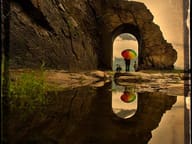 Roman Road to Gaul and Donnas ArchThe stretch cut into the rock is 221 metres long, with walls up to 13 metres high
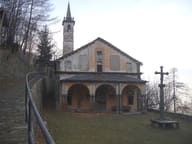 Machaby SanctuaryRebuilt in 1687, restored in 2021–2023; feast of Our Lady of the Snows on 5 August
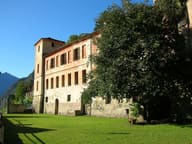 Vallaise CastleThe Hall of Honour preserves ten frescoed views of the former Vallaise fiefs
 Col FenêtreIn the meadows below the pass the rare wild peony flowers in early June