 The Aosta Trip
Verrès Castle
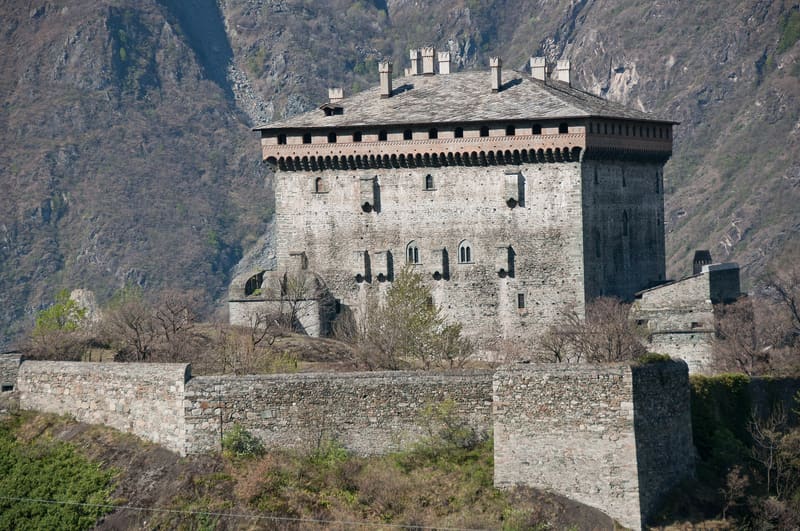
In 1536 Renato di Challant strengthened the walls to withstand firearms
The castle is a compact single block, one building with no separate ring of walls, built on a rocky spur above the village. The quadrangular courtyard is surrounded by two-light windows on three floors, which are linked to one another by a monumental staircase with rampant arches. The rooms are bare, without furnishings, and have fireplaces with decorated surrounds.
 One-day guide · freeThe Valley of the ChallantA day among the castles of the middle valley passes here: three homes of the Challant family and a museum of modern art.Open the guide →
Visiting
Guided tours only, groups of up to 25, last admission 30 minutes before closing. Opening hours: October–March 10:00–13:00 and 14:00–17:00, April–September 9:00–19:00. Closed on Mondays, except in July, August and on public holidays, and closed on 25 December and 1 January. Tickets also available online on the MiDA platform. Not wheelchair accessible: you go on foot along a 10–20 minute uphill path. Full price €6, concession €4 (groups of at least 25 paying visitors and partner agreements), aged 19–25 €3, free for under-18s.
History
In 1287 a castle at Verrès is recorded as belonging to the De Verretio family. After this line died out around the mid-fourteenth century, the House of Savoy granted the fief to Ibleto di Challant in 1372.
Ibleto had the castle entirely rebuilt as a fortress, completed in 1390: an inscription in Gothic lettering above a first-floor entrance records the event; the local name ‘Ebalo’ also appears in the Latin inscription of 1536 on the entrance portal. The result is a compact, cubic structure about 30 metres along each side, with walls more than 2.5 metres thick, without the usual separate ring of walls and the scattered buildings of traditional castles: the three floors are linked by a monumental stone staircase.
On the death of Francesco, first Count of Challant, without male heirs, his daughter Caterina and her husband Pietro Sarriod, lord of Introd, clashed with relatives and with the Duke of Savoy over the inheritance: according to a local legend the two are said to have danced with the people in the square at Verrès in the mid-fifteenth century to win their support.
In 1536 Count Renato di Challant, with the Spanish military architect Pietro de Valle, modernised the defences, adding bastions and artillery positions suited to firearms. Renato died without heirs in 1565 and the castle returned to the House of Savoy; in 1661 Duke Charles Emmanuel II had its weapons transferred to Forte di Bard, and the building, stripped of its roof by its owners to avoid taxes, gradually fell into decay until the Challant family died out in the early nineteenth century.
In 1894 the architect Alfredo d'Andrade bought it on behalf of the Italian State and began its restoration. It passed to the Region after the Second World War, and in the 1980s the stone roof was rebuilt; between 2004 and 2007 the castle was closed for works. Today it is open to visitors and every year hosts the Verrès Historical Carnival, which re-enacts the legend of Caterina's dance.
Nearby
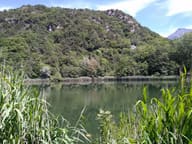 Lago di VillaThe only lake in the Aosta Valley with the white water lily, in flower in June and July
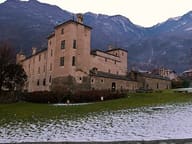 Issogne CastleIn the courtyard, the wrought-iron pomegranate fountain, a symbol of prosperity
 Cascata di IsollazThe Évançon drops almost 50 metres between two rock walls
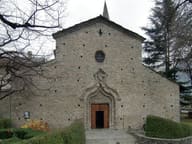 ArnadSan Martino, with three aisles, is the most important example of Romanesque in the Aosta Valley
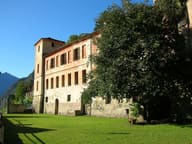 Vallaise CastleThe Hall of Honour preserves ten frescoed views of the former Vallaise fiefs
- Ru HerbalChannel from 1393, about 12 km long, carrying water as far as the hills of Verrès