 The Aosta Trip
Roman Remains at the Little St Bernard Pass
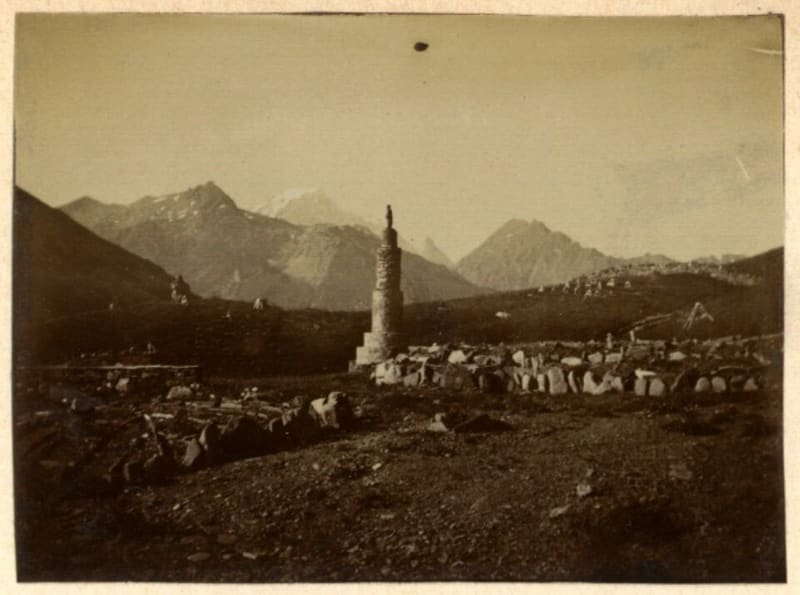
The foundations of the eastern mansio, on the Italian side, measure 25.5 by 67.5 metres
On the Italian side of the pass, among the meadows, there remain the foundations of the eastern mansio, the Roman staging post on the road to Gaul, and the remains of a small quadrangular temple (fanum) excavated and restored at the end of the 1920s. A little further on, towards the border, the Joux column now supports the statue of St Bernard. The pass can only be reached in summer, when the road is open.

Visiting
The pass can be reached by car or on foot only from June to October, when the road is open (closed by snow in the other months); free, with no ticket or fixed opening hours. A summer bus service links La Thuile to the pass. It is worth checking the bus times before setting off.
History
The Romans built the road that crosses the Little St Bernard Pass, the Alpis Graia, to link Italy to Gaul across the Graian Alps. On the Italian side stood a mansio, a staging post with lodging and fresh horses for travellers and soldiers passing through: its foundations, which measure 25.5 by 67.5 metres, can still be seen among the meadows of the pass. Next to the mansio are the remains of a fanum, a small quadrangular temple of Gallic worship.
On the pass there was also a column, the Columna Jovis, perhaps linked to the cult of Jupiter and already an object of devotion in pre-Roman times: hence the Latin name of the pass, which in the Middle Ages became Mons Minoris Iovis. The excavations have also yielded a silver bust of Jupiter Dolichenus and some votive plaques, now kept at the Aosta Archaeological Museum.
According to tradition, around the year 1000 St Bernard of Menthon climbed to the pass to drive out brigands and pagan cults; he is credited with founding the hospice, destroyed several times by wars and fires and always rebuilt in the following centuries. His name replaced Jupiter's in the place names of the pass, and the Roman column ended up supporting the statue of the saint.
The fanum on the Italian side was uncovered and restored at the end of the 1920s. The modern carriage road, opened in 1858, replaced the Roman route for regular connections between the two valleys.
Today the pass, on the Italian side in the municipality of La Thuile, can only be reached in summer, when the snow leaves the road clear: the foundations of the mansio and of the fanum remain visible among the meadows, while a little further on, towards the border, the column with the statue of St Bernard still marks the highest point of the pass.
Nearby
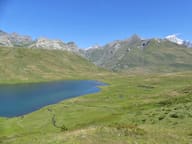 Lago VerneyAmong the largest natural lakes in the region: 20 hectares at 2,088 m, by car from the main road
- Laghi di Bella CombaTwo lakes at 2,374 m: in the second, a large snail-shaped boulder in the middle
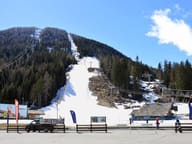 La Thuile, Espace San BernardoRun 3 Franco Berthod reaches a maximum gradient of 76%
- Berton House Museum1975 villa of the Berton brothers: 200 pieces of Aosta Valley craftwork and 4,200 books
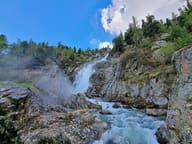 Cascate del RutorThree falls between 1,700 and 2,000 m; over the third a 16 m steel footbridge, since 2014
- La Thuile Cross-Country TrailsThe cross-country trails at Arly, in La Thuile, are free seven days a week