 The Aosta Trip
Gran Paradiso – Paradisia Alpine Botanical Garden
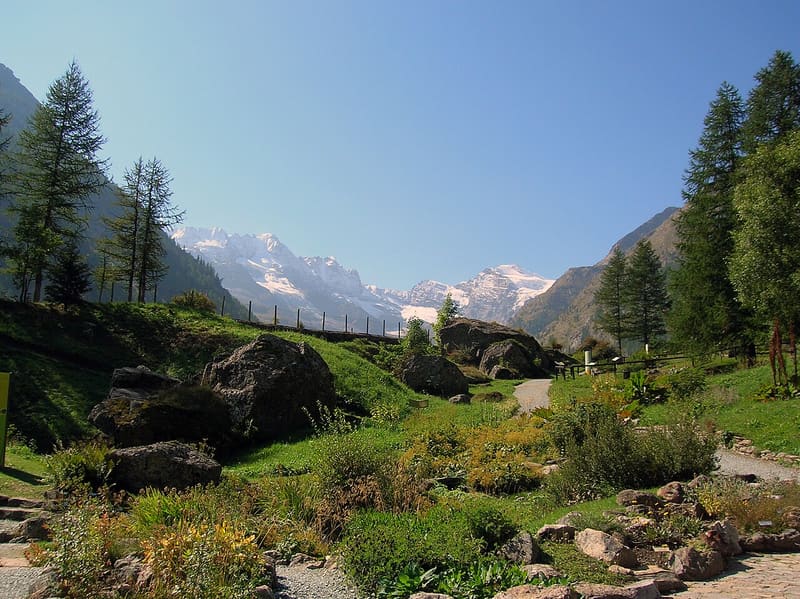
About 1,000 species of alpine flora at 1,700 m, grown since 1955 facing Gran Paradiso
The garden is at Valnontey, at 1,700 m, and recreates mountain habitats: peat bog, moraine, limestone scree, pseudo-steppe and alder wood, with rocks, a lichen section and a butterfly garden. Two marked routes, black in the centre among the rock gardens and yellow along the perimeter. The name comes from the lily Paradisea liliastrum.

Visiting
Open from late May to mid-September: until 30 June and from 31 August 10:00–13:00 and 13:30–17:30, in July and August 9:30–13:00 and 13:30–18:00. Full price €5, with a guided tour at 10:30, 14:30 and 16:30. Dogs not allowed, only partly accessible. At the end of summer there are few flowers in bloom.
History
The garden was created in July 1955, by decision of the Park's board of directors, to protect the flora of its valleys and make it known. The name is misleading: it comes not from Gran Paradiso but from the mountain lily, Paradisea liliastrum, a white-flowered member of the lily family that grows wild in the surrounding meadows. Valnontey, at 1,700 metres, was chosen as the site: the altitude is moderate, and the ground, about a hectare full of hollows and dips, makes it possible to recreate different habitats.
The first scientific director was the Turin botanist Bruno Peyronel, who ran the garden in 1955–56 and then again until 1970. A man of forthright character, he fought for the protection of nature when it was not yet fashionable, and after the war he also worked on the revival of the Chanousia alpine garden, at the Little St Bernard Pass. After him the garden passed through a long series of curators, down to Laura Poggio and Andrea Mainetti, who in 2025 led the visit for its seventieth anniversary.
Today the garden belongs to the Park Authority, which looks after its scientific side, while visits and events are entrusted to the Fondation Grand Paradis. There are more than a thousand species, all collected in the wild or grown from seed in the garden's nursery. Every year the seeds collected in the garden and in the mountains go into a catalogue, the Index Seminum, which is used for exchanges with botanical gardens all over the world.
The plant labels have a colour code: yellow for species that grow in Italy, in the Alps or in the Apennines, white for those from other mountains of the world, red for medicinal plants, with a skull if they are poisonous. The lichens were not planted: they colonise some large boulders on their own and survive thanks to the almost pollution-free air. Winter here is harsh: in the winter of 2008–2009 a total of 7.74 metres of snow fell, covering the garden from November to May to a depth of up to 2.5 metres. The richest flowering comes between mid-June and mid-July.
Nearby
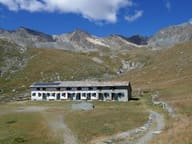 Rifugio Vittorio SellaThe king's hunting lodge at the Lauson, a CAI Biella hut since 1922
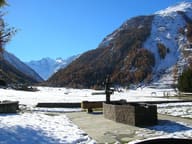 CogneFrom the village a gondola climbs the wooded slopes of the Montseuc, among north-facing runs
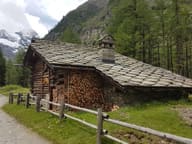 VermianaVillage of fewer than ten houses on the floor of the Valnontey, among ibex and chamois
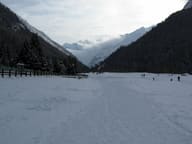 Cogne Cross-Country TrailsIn 2025 the Prati di Sant'Orso hosted three cross-country World Cup races
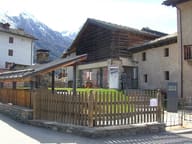 Maison de Cogne Gérard Dayné Ethnographic MuseumThe beu, the cowshed where people and animals lived together to keep warm
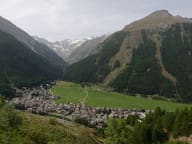 CogneThe main village looks onto the Sant'Orso meadow, at 1,544 m in the Gran Paradiso