 The Aosta Trip
Castel Savoia
Château de Savoie
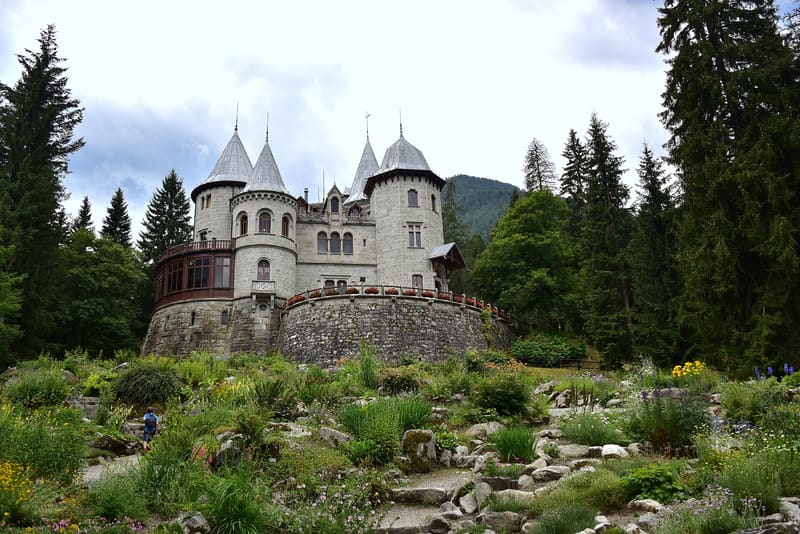
First stone laid on 24 August 1899 in the presence of Umberto I
The rectangular central block is flanked by five turrets in local grey stone, in a style that recalls the fifteenth-century castles of Lombardy. Inside, the oak grand staircase is decorated with carved griffins and eagles. Queen Margherita's apartment is on the piano nobile and is partly furnished with pieces from Villa Margherita; the castle stands at Belvedere, with a view over the valley as far as the Lyskamm glacier. It was built at the wish of Queen Margherita of Savoy as a summer residence.
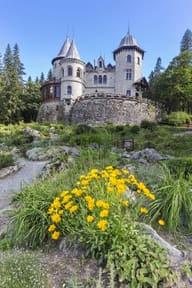 One-day guide · freeGressoney, the Valley of the WalserA day in the valley of the Walser passes here, between Queen Margherita's castle and the wooden houses of Gressoney.Open the guide →
Visiting
Opening hours: October–March 10:00–13:00 and 14:00–17:00, April–September 9:00–19:00. Closed on Mondays, except in July, August and on public holidays, and on 25 December and 1 January. Guided tours only, in groups of up to 25 people, with an audio guide in French and English. Full price €10, aged 19–25 €3; the €7 concession is for groups of at least 25 people. Admission is free for under-18s. There is also a combined ticket with the Alpenfaunamuseum Beck-Peccoz at €12 (concession €9, aged 19–25 €3). The last tour starts 30 minutes before closing. Tickets on midaticket.it.
History
Queen Margherita of Savoy, wife of King Umberto I, began staying at Gressoney-Saint-Jean from 1889, as a guest of Baron Beck Peccoz at Villa Margherita. Wanting a residence of her own at altitude, the queen obtained permission to build it after some resistance from her husband, who preferred Sarre Castle for his long hunting expeditions.
The first stone was laid on 24 August 1899, in the presence of the king, in a panoramic position near the Colle della Ranzola, at an altitude of about 1,440 metres. The design was entrusted to the architect Emilio Stramucci, already active in the alterations to the Royal Palace of Turin, who designed a building in neo-medieval style, inspired by fifteenth-century Lombard Gothic: the grey stone came from the quarries of Chiappey, Gaby and Vert.
In 1900 Umberto I was assassinated at Monza by Gaetano Bresci and never saw the residence completed. Work ended in 1904: the result was a building with five turrets of different heights and semicircular verandas. The interiors, eclectic in taste, were furnished with neo-medieval furniture carved by the cabinetmaker Michele Dellera, while the painter Carlo Cussetti made painted glass windows and decorations with Savoyard motifs, such as the Savoy knot and the margherita (daisy), the flower that recalled the queen's name.
Margherita, left a widow, spent long summer stays there until 1925 and also received figures such as the poet Giosuè Carducci; she died the following year, in 1926, at Bordighera. In 1936 the castle was sold to the Milanese industrialist Ettore Moretti; in 1981 the heirs transferred it to the Aosta Valley Autonomous Region, which still owns it and runs it as a museum.
Nearby
- Gressoney-Saint-Jean, WeissmattenThe Leonardo David run is floodlit: on some evenings you can ski at night
 Beck-Peccoz Regional Museum of Alpine FaunaCollection of about 90 antique weapons and hunting trophies with horn anomalies
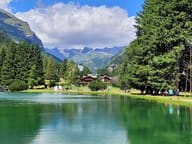 Gressoney-Saint-Jean Cross-Country TrailsAround Lago Gover, in the village, a 5.2 km loop is lit for skiing in the evening
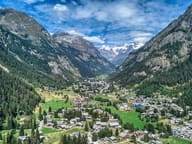 Gressoney-Saint-JeanOn the beams of the Walser merchants' houses, a heart topped by a 4
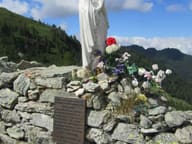 Colle RanzolaA plaque to Tolstoy, who came this way in 1857, and a dry-stone wall from 1800 against Napoleon
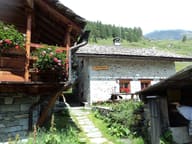 Rifugio Alpenzu GrandeInside Alpenzu Grande, a Walser village recorded as early as 1249
