Fénis, Issogne and Verrès, three castles of one family, and the modern art of Castello Gamba
4stops
49 minby car
10:00–16:50suggested times
theaostatrip.comPhoto: Rufus46, CC BY-SA 3.0
The route
From Fénis to Châtillon
All four castles are closed on Mondays, except in July, August and on public holidays. Fénis, Issogne and Verrès can only be visited with a guide; the times here are the winter ones, the tightest: in summer you can start earlier.
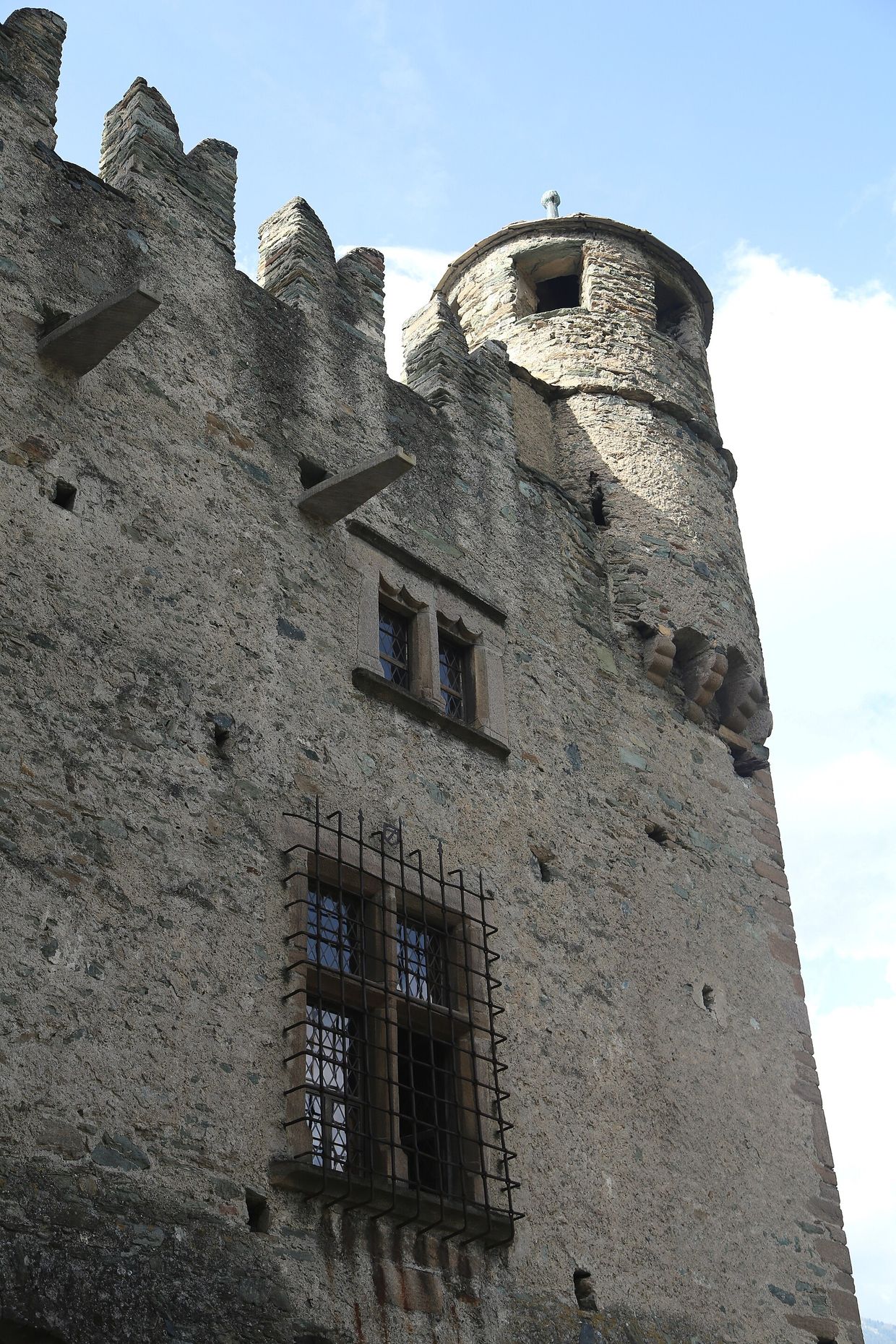
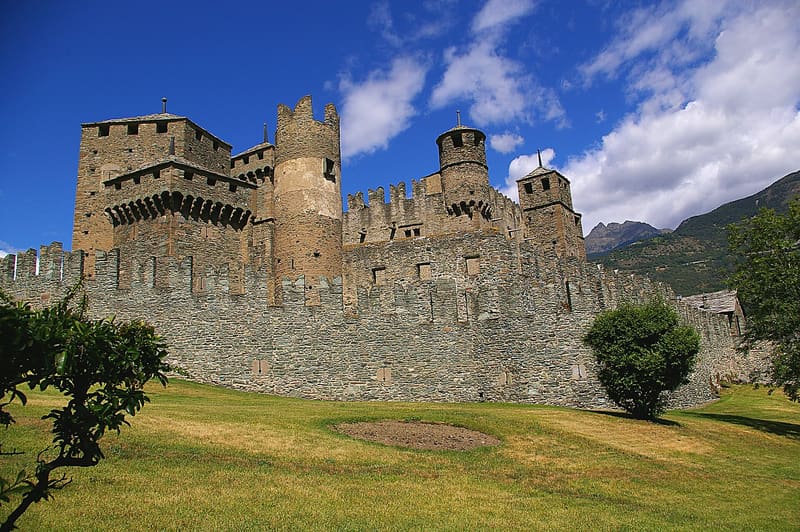
The castle has a pentagonal plan, with circular towers at the corners and a double ring of walls. In the courtyard a semicircular staircase rises beneath the fresco of St George and the Dragon, while the wooden balconies bear maxims written in Old French.
The present towers and crenellated walls date from the mid-fourteenth century, under Aimone di Challant. The castle remained with the Challant family until 1716, when it passed to Count Baldassarre Castellar. In 1895 the castle passed to the Italian State through Alfredo d'Andrade, the architect who oversaw the restoration of many Aosta Valley castles in the late nineteenth century.
If you go. Guided tours only, groups of up to 25, French/English audio guide included. Opening hours: October–March 10:00–13:00 and 14:00–17:00, April–September 9:00–19:00. Closed on Mondays, except in July, August and on public holidays, and on 25 December. Full price €10, concession €7; tickets also online at midaticket.it.
2
11:25 · 45 min
In the courtyard, the wrought-iron pomegranate fountain, a symbol of prosperity
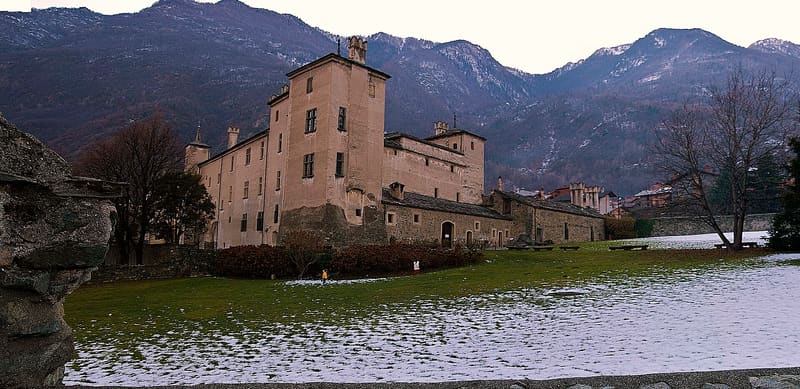
From outside, the castle is a massive, unassuming building, but the inner courtyard reveals the frescoed portico with shops, markets and scenes of daily life from the early sixteenth century. In the centre stands the wrought-iron pomegranate fountain. The rooms of the piano nobile preserve the coffered ceiling of the Room of the King of France.
Once owned by the bishops of Aosta, it later passes to the Challant family. Between 1490 and 1509 Giorgio di Challant, prior of the collegiate church of Sant'Orso, turns it into a noble residence with a horseshoe-shaped courtyard and an Italian-style garden. Fallen into decline in the nineteenth century, it is bought and restored in 1872 by the painter Vittorio Avondo, who donates it to the State in 1907.
If you go. Guided tours only, groups of up to 25, online booking recommended. There are two routes: one on Giorgio di Challant's castle and a multimedia one devoted to Avondo. The last tour starts an hour before closing. Opening hours: October–March 10:00–13:00 and 14:00–17:00, April–September 9:00–19:00. Closed on Mondays, except in July, August and on public holidays, and on 25 December and 1 January. Full price €10, concession €7, free for under-18s.
3
14:00 · 60 min
In 1536 Renato di Challant strengthened the walls to withstand firearms
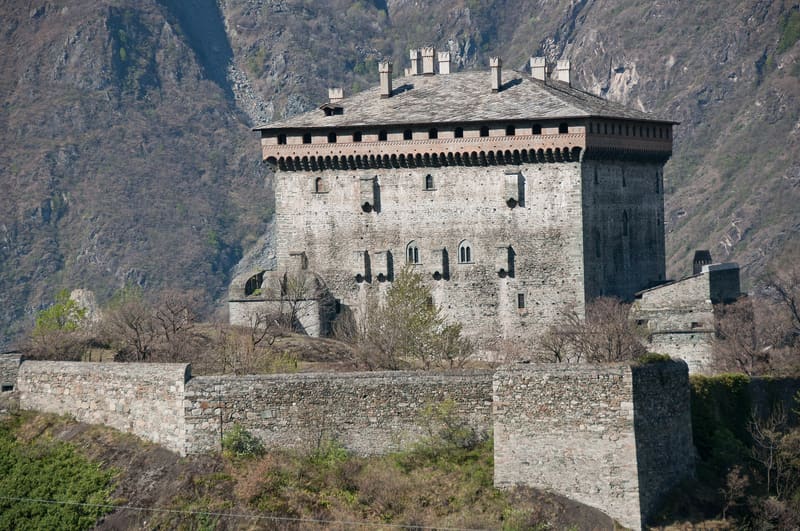
The castle is a compact single block, one building with no separate ring of walls, built on a rocky spur above the village. The quadrangular courtyard is surrounded by two-light windows on three floors, which are linked to one another by a monumental staircase with rampant arches. The rooms are bare, without furnishings, and have fireplaces with decorated surrounds.
First mentioned in 1287, the castle was rebuilt in 1390 by Ibleto di Challant, who gave it its present single-block form. In 1536 Renato di Challant strengthened the defences to withstand firearms. After his death it passed to the House of Savoy, then returned to the Challant in 1696 until the family died out.
If you go. Guided tours only, groups of up to 25, last admission 30 minutes before closing. Opening hours: October–March 10:00–13:00 and 14:00–17:00, April–September 9:00–19:00. Closed on Mondays, except in July, August and on public holidays, and closed on 25 December and 1 January. Tickets also available online on the MiDA platform. Not wheelchair accessible: you go on foot along a 10–20 minute uphill path. Full price €6, concession €4 (groups of at least 25 paying visitors and partner agreements), aged 19–25 €3, free for under-18s.
4
15:20 · 90 min
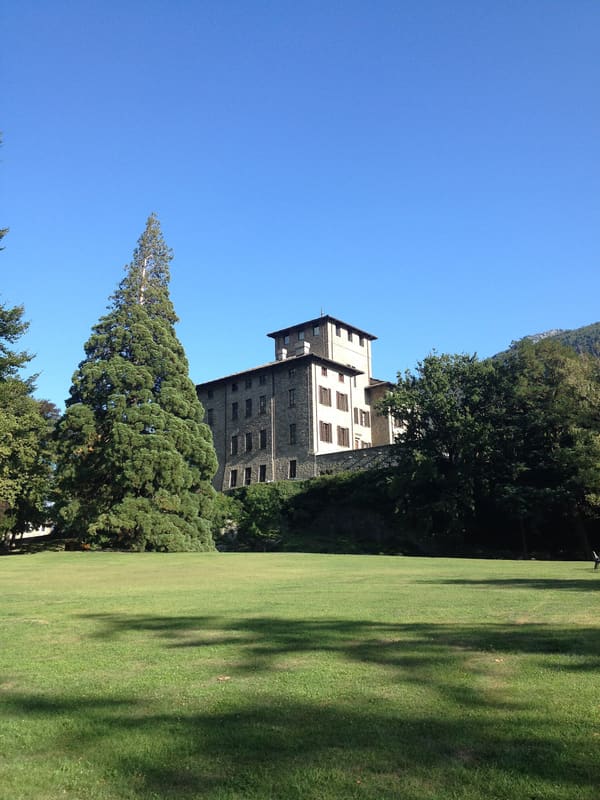
In the park, among 150 trees, grows a California giant sequoia
One kilometre from the centre of Châtillon, on a hill, the villa stands in 50,400 square metres of English-style park with about 150 trees, including a giant sequoia, a bald cypress and a Judas tree. Inside, 13 rooms house over 150 works from the regional collection of modern and contemporary art, including sculptures by Martini, Mastroianni and Manzù and paintings by Casorati and Guttuso.
The villa was built at the start of the twentieth century to a design by the engineer Carlo Saroldi, at the wish of Baron Carlo Maurizio Gamba, who was married to Angélique Passerin d'Entrèves. Since 1982 it has belonged to the Aosta Valley Autonomous Region, which has set up the regional museum of modern and contemporary art there.
If you go. Closed on Mondays (open in July, August and on public holidays), 25 December and 1 January. Opening hours: October–March Tuesday–Sunday 10:00–17:00, April–September 9:00–19:00. Full price €6, concession €4. Free for under-18s; for ages 19 to 25 admission is free or costs €3: ask at the ticket office. Guided tours included in the ticket at 11:30 and 15:30, from 1 August 2026.
 1