 The Aosta Trip
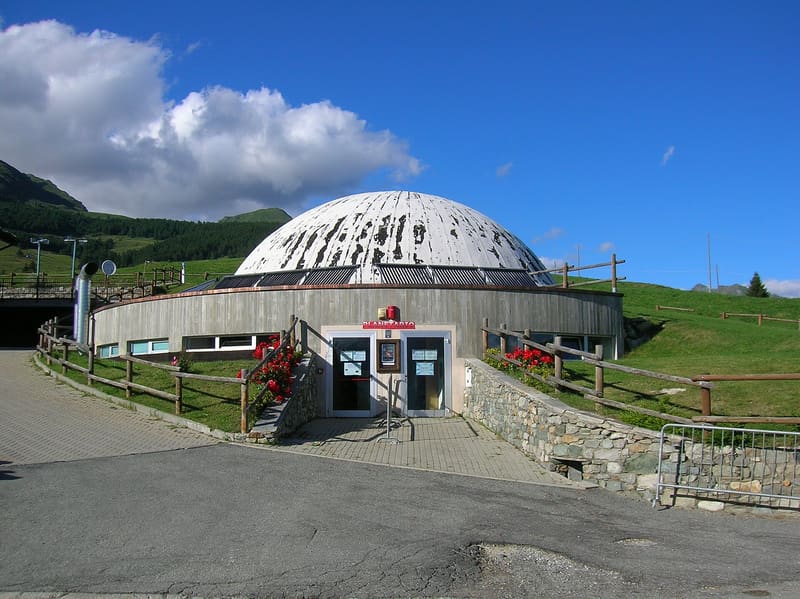
Aosta Valley Astronomical Observatory and Lignan Planetarium
On the Teaching Terrace, seven 25 cm telescopes host the Saturday night tours
The Planetarium, at 1,633 m, shows 4K films in a covered, heated hall; the Observatory, at 1,675 m, includes the Heliophysics Laboratory for the Sun and the Teaching Terrace where, in the evening, an operator guides observation with the naked eye and through the telescope with a laser pointer. It lies in Italy's first Starlight Stellar Park, above Nus.

Visiting
Planetarium shows on Saturdays at 16:00 and 18:00, programme renewed every month, €6 (free for ages 0–6). Guided night tours on Saturdays at 21:30 (in summer on other evenings too, in winter only on Saturdays), full price €13, €8 for ages 7–17, free for ages 0–6; observation with the naked eye and through the telescope with an operator. Online booking required at oavda.it; ticket office at the reception of the Lignan Planetarium. The facility is accessible to people with disabilities.
Collections
Section — The Planetarium. In a covered, heated room at 1,633 m, a 4K digital projector recreates the starry sky on a dome, with shows on astronomy themes renewed every month.
Section — The Heliophysics Laboratory. At the Observatory, at 1,675 m, a 250 mm telescope fitted with an H-alpha filter lets you observe the Sun and its chromosphere, a turbulent layer of its atmosphere, safely and in groups.
Section — The Teaching Terrace. This is where the night-time guided tours take place: seven 250 mm telescopes in Cassegrain optical configuration, up to 70 places, and an operator who guides naked-eye observation with a laser pointer to recognise the main constellations.
Section — The research instruments. The Observatory also houses the professional instruments with which the centre carries out its own research: an 810 mm main telescope, a 120 mm siderostat and other instruments for studying the solar system, the stars of the Milky Way, distant galaxies and exoplanets, with results published in journals such as Astronomy & Astrophysics and The Astrophysical Journal.
Section — The Teaching Oasis. An area designed for young children, with hands-on activities introducing astronomy, linked to school curricula.
The Planetarium shows change every month.
History
In 1989 a promoting committee was formed in Nus to build an astronomical observatory, made up of a representative of the municipal council and local astronomy enthusiasts. Design of the facility, on the Lignan plateau above 1,600 metres in the Saint-Barthélemy valley, began in 1994; the works were completed in 2002.
Regional law no. 24 of 14 November 2002 established a foundation to run the Observatory; on 24 May 2003 the Fondazione Clément Fillietroz-ONLUS was constituted by public deed, promoted jointly by the Aosta Valley Autonomous Region, Nus municipality and the Unité des Communes Valdôtaines Mont-Émilius, and named after the Aosta Valley hotelier Clément Fillietroz, who died in 1981.
The first guided tours of the Observatory started in the summer of 2003. The Lignan Planetarium, planned from the outset to complete the Observatory but built at a later stage, opened instead in 2009, with a heated projection hall separate from the Teaching Terrace where you observe the sky live.
The Foundation obtained ONLUS status at the end of 2004. Since 2016 scientific direction has been entrusted to the astrophysicist Jean-Marc Christille, under whose leadership the facility pursues four lines of research, from the solar system to exoplanets, published in journals such as Astronomy & Astrophysics and The Astrophysical Journal; meanwhile Lignan obtained certification as a Starlight Stellar Park, the first in Italy.
Nearby
- Saint-Barthélemy Cross-Country TrailsThe Lo Gran Tor loop is 30 km long, between 1,960 m at Praz de l'Arp and 2,014 m at the Ollière
- Bivacco Rosaire-Clermont1990 bivouac hut on the Alta Via 1, above Lignan, with 12 places, always open
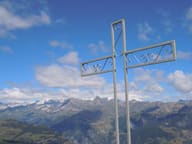 Becca d'AverThe last summit to the south on the ridge that comes down from the Dent d'Hérens, facing the Matterhorn
- Champlong Cross-Country TrailsOne variant passes a larch estimated to be 700 years old
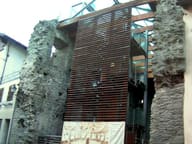 Pilate's CastleTwo corner turrets and three of the four perimeter walls in exposed stone remain
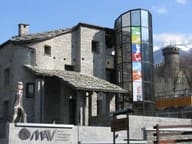 MAV - Museum of Traditional Aosta Valley CraftsThe more than 500 works of the Brocherel collection open the route, in the Memory room